What is the Montessori Children’s House?
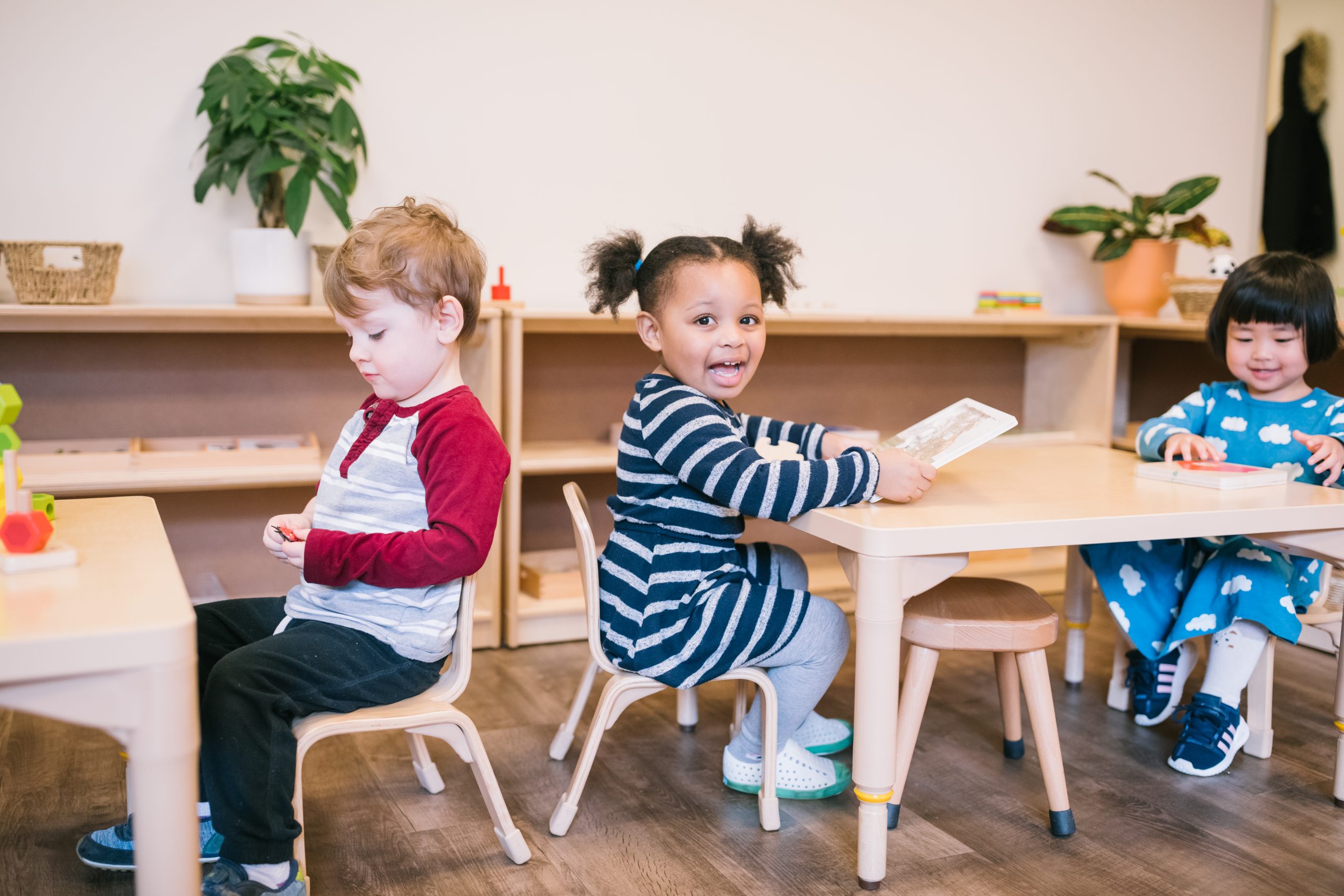
The Montessori Children’s House is the carefully prepared environment designed for children in the preschool and kindergarten years, typically ages 3 to 6.
It comes from Dr. Maria Montessori’s original “Casa dei Bambini,” which translates to “Children’s House,” a name she chose deliberately. It conveys a simple truth. This is not a classroom where adults lecture and children sit passively. It is a home-like space created entirely for the child.
Everything in the Children’s House is designed around your child’s natural drive to explore, practice real skills, and build confidence. Shelves, materials, furniture, and routines are scaled to the child’s size and developmental needs. The environment invites independence, curiosity, and deep concentration.
Children move freely through the room, choosing meaningful work that aligns with their developmental stage. Materials follow a thoughtful sequence, guiding children from simple to increasingly complex skills. The Montessori guide offers lessons individually or in small groups, then steps back to observe.
This learning environment ensures that every child receives the right lesson at the right time. It helps children feel respected, capable, and genuinely excited to learn.

The Age Range: Preschool and Kindergarten Together
Children ages 3, 4, 5, and 6 share the same classroom. This mixed-age structure is one of the most powerful features of Montessori education.
It gives your child:
- A stable classroom community over several years
- Predictable routines that grow with them
- Daily opportunities to observe and learn from older peers
- Leadership and mentoring opportunities as they grow older
Parents often report that their child becomes more confident, more responsible, and more socially aware simply by being part of a mixed-age Montessori community.

The Prepared Environment
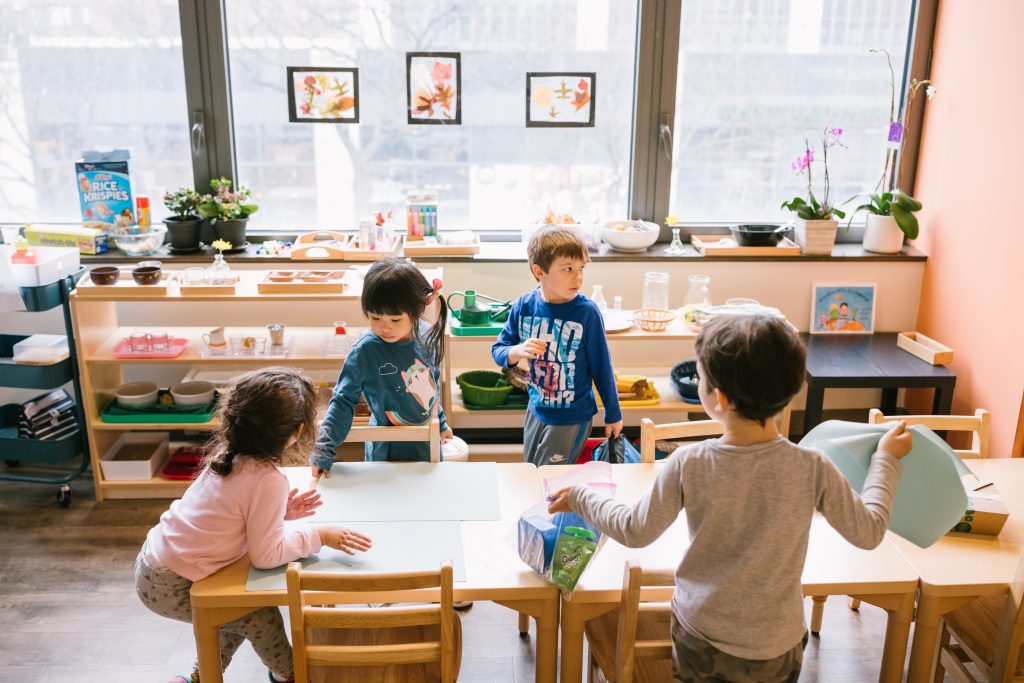
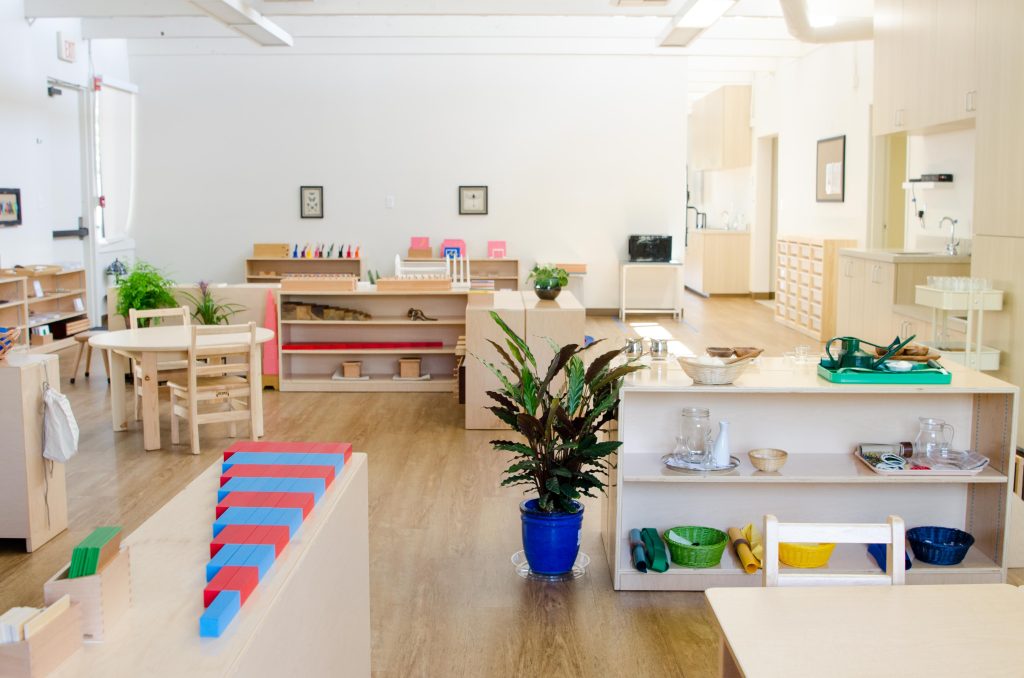
A Montessori Children’s House does not look like a traditional preschool or kindergarten classroom. It is intentionally designed to support independence, calm focus, and intrinsic motivation.
You will see:
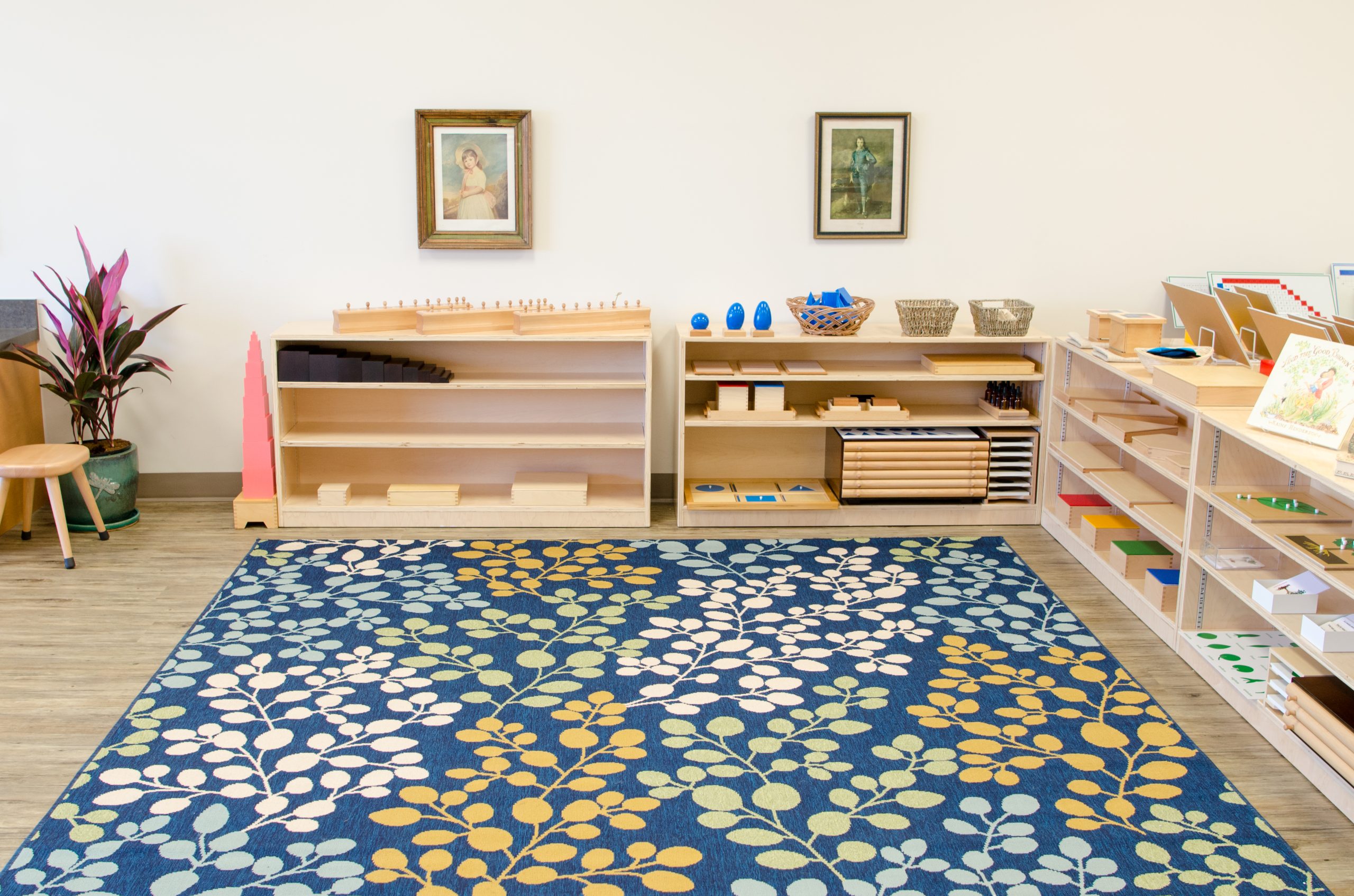
- Low shelves with accessible materials
- Child-sized furniture that encourages independence
- Beautiful, orderly work trays
- Defined areas for literacy, math, Practical Life, and Sensorial work
- Open floor space for movement, mats, and collaboration
Every element supports your child’s development. Nothing is random or decorative. Everything serves a purpose.
What this means for your child
Your child will feel capable, trusted, and respected. The environment communicates: “You can do this,” and children respond by rising to the expectations placed upon them, often surprising parents with their maturity and focus.

The Four Pillars of the Montessori Children’s House
At the heart of the Children’s House curriculum are four core areas of learning: Practical Life, Sensorial, Literacy, and Mathematics. Each one follows a clear, research-informed sequence that builds the foundations for elementary success.
At Guidepost Montessori, we also emphasizes Grace and Courtesy, which strengthens social development and emotional wellbeing.
1. Practical Life
Practical Life exercises mirror real tasks found at home. Children learn to care for themselves and their environment.
Typical activities include:
- Pouring and transferring with pitchers, spoons, and funnels
- Washing hands, dressing frames, and learning to zip and button
- Sweeping, dusting, table washing, and polishing
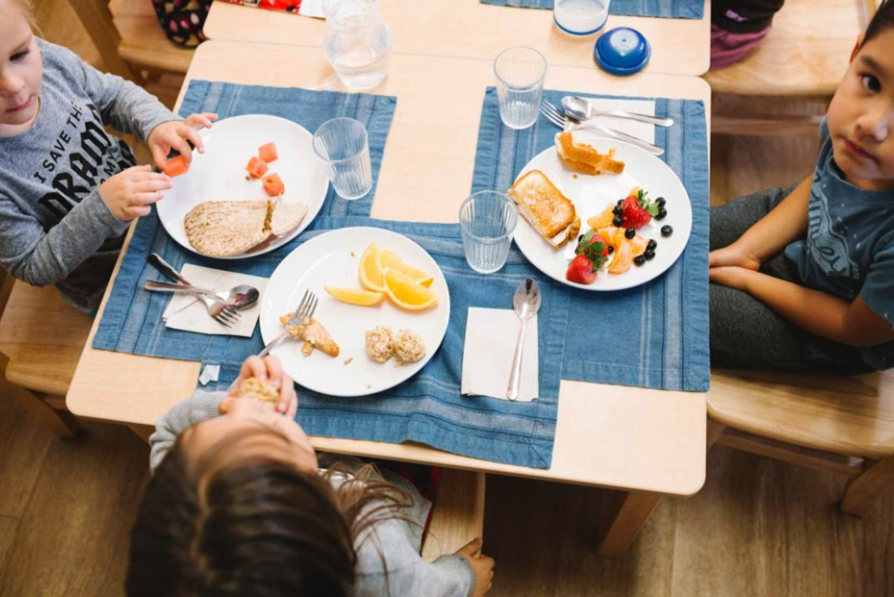
- Preparing snacks, cutting fruit, and setting up real food work
- Watering plants and caring for the classroom environment
What this means for your child
Children become calmer, more capable, and more independent. They gain:
- Strong fine motor control that supports handwriting
- Patience and perseverance in multi-step tasks
- Pride in contributing to the classroom community
- A sense of order that translates to academic work
Practical Life is also the foundation for deep concentration, one of the strongest predictors of future academic success.
2. Sensorial
Sensorial materials help children refine their senses and build the cognitive structures that support math, reading, and scientific thinking.
Children explore:
- Size, weight, volume, and dimension
- Color gradients, geometric shapes, textures, and patterns
- Sound matching, scent discrimination, and tactile memory
Examples include:
- The Pink Tower
- The Broad Stair
- Knobbed cylinders
- Color tablets
- Sound boxes and baric tablets
- Geometry solids
What this means for your child
Sensorial experiences organize your child’s thinking. They learn how to classify, compare, sort, and sequence. This builds:
- Logical thinking
- Early math reasoning
- Rich descriptive language
- Strong focus and precision
This is not play without purpose. It is foundational brain work that prepares your child for abstract learning later.
3. Literacy
Montessori literacy follows a natural developmental sequence.
Children begin with:
- Conversations, storytelling, and vocabulary enrichment
- Classified picture cards and object-to-picture matching
- Sound games that build phonemic awareness
Then they progress to:
- Tracing sandpaper letters and learning letter sounds
- Forming words with the Moveable Alphabet
- Identifying phonetic words in early readers
- Reading short sentences and simple books
- Writing words, labels, and short stories
What this means for your child
Children learn to read because the groundwork has been laid thoughtfully and joyfully. They develop:
- Strong phonetic awareness
- A rich spoken vocabulary
- Confidence in early writing
- A love of reading that comes from success, not pressure
Many Montessori kindergarteners read fluently and write with clarity because they have moved through each step at the right time for their development.
Mathematics
Montessori math is admired worldwide because it helps children actually understand what numbers mean!
Children work with materials that make quantity physical and visible. They learn:
- Counting and number recognition
- The decimal system using golden beads
- Addition, subtraction, multiplication, and division
- Patterns, sequencing, and early problem solving
Materials such as:
- Number rods
- Golden bead units, tens, hundreds, and thousands
- Spindle boxes
- Stamp game
- Bead chains
What this means for your child
Your child will not memorize math facts without context. Instead they gain:
- A clear sense of quantity
- True confidence with numbers
- Comfort working with multi-digit operations
- Skills in logical thinking and problem solving
Montessori children often transition to elementary math with strong conceptual understanding, not fear.
Grace and Courtesy: A Guidepost Signature Strength
In addition to the four core pillars, Guidepost Montessori places special emphasis on Grace and Courtesy in our Children’s House classrooms. This is Montessori’s approach to social and emotional development and is woven into daily classroom life.
Children practice:
- How to greet others politely
- How to ask for help
- How to join a group respectfully
- How to resolve disagreements with words
- How to offer help and receive help
- How to take turns and respect personal space
What this means for your child
Your child learns to communicate with confidence and kindness. They grow into:
- A child who can say, “No, thank you,” respectfully
- A child who can advocate for themselves
- A child who treats others with empathy
- A child who feels calm, secure, and capable in social situations
Grace and Courtesy helps children navigate friendships, group settings, and the emotional ups and downs of the preschool and kindergarten years.

How the Children’s House Prepares Your Child for Life
The three-year journey in the Montessori Children’s House, culminating in the kindergarten year, shapes far more than academic readiness. It builds lifelong habits of mind and character that support your child well into adolescence and adulthood.
Children who complete the full cycle often show strong reading readiness or fluent early reading, along with a deep, concrete understanding of foundational math concepts. These are not skills memorized for a test. They are the result of years of hands-on work that helps children understand ideas at a level that lasts.
Daily independence is also a major outcome. Children learn to manage their belongings, organize their work, and complete tasks without being prompted. This sense of ownership becomes one of the strongest predictors of later academic success.
Socially and emotionally, the Children’s House gives children real practice in communication and conflict resolution. Mixed-age classrooms allow older children to lead and mentor, and younger children to observe and absorb. Over time they become confident speaking up, collaborating respectfully, and contributing to a community.
Montessori kindergarten is the capstone year that pulls all of this together. It is a period of consolidation, leadership, and mastery. Children step into their final year ready to take on more responsibility, more challenging work, and a more active role in the classroom.
By the time your child leaves the Children’s House, they are not only academically prepared for elementary school. They are emotionally grounded, socially capable, and equipped with the confidence and independence that will support them throughout their life!

Your Top 5 Questions on Montessori Kindergarten Answered
Learn more
You can explore each area of our Montessori curriculum in depth by visiting our Guidepost Montessori curriculum page.
To experience the Children’s House firsthand, we invite you to schedule a tour and find a school near you. Families often say that once they see the classroom in action, they immediately understand why Montessori preschool and kindergarten feel so different and why they are so effective.
Your child deserves a joyful, thoughtful, and empowering early childhood experience. The Children’s House is designed for exactly that.