
children's house.
For children ages 2.5 to 6 years (ages vary by campus)
A Guidepost Children’s House classroom empowers children to take increasing ownership over their learning journey while building the foundational knowledge, skills, and attitudes they’ll need to flourish in elementary and beyond.
In Children’s House, our goal is more than just deeply embedding a love of learning. It’s to help every child find challenges exciting, effort rewarding, and sustained focus worthwhile.
features of guidepost’s
children's house program:
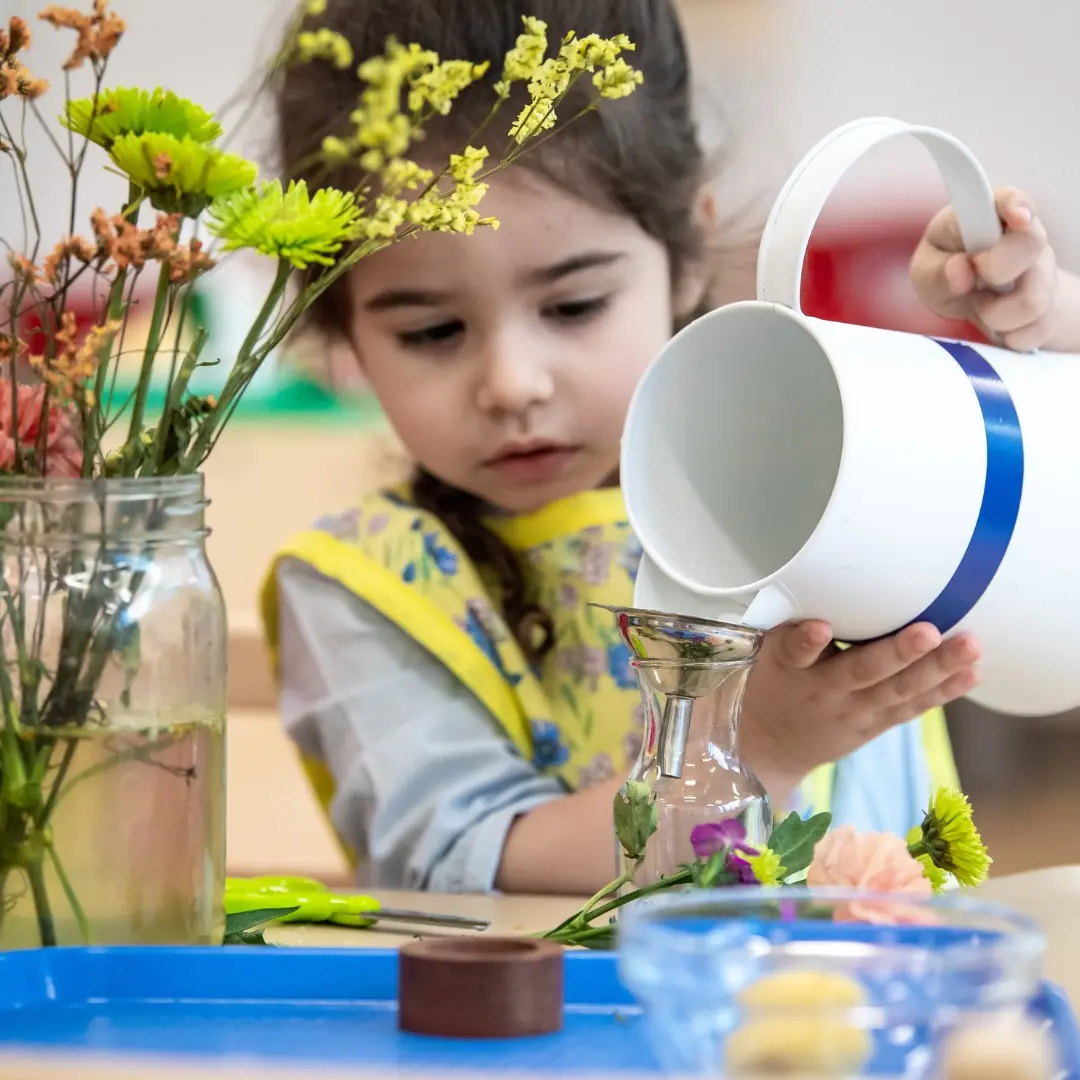
Developing concentration & self-confidence.
Above all else, a young child craves and needs to have the experience of being capable—of achieving real success at meaningful practical tasks.
From preparing a snack to washing windows to tying shoes, Guidepost’s ‘Practical Life’ curriculum enables children not only to build this confidence, but to practice focusing, persisting through challenges, and following a complex and logical set of steps—all while doing things they find inherently interesting and enjoyable.
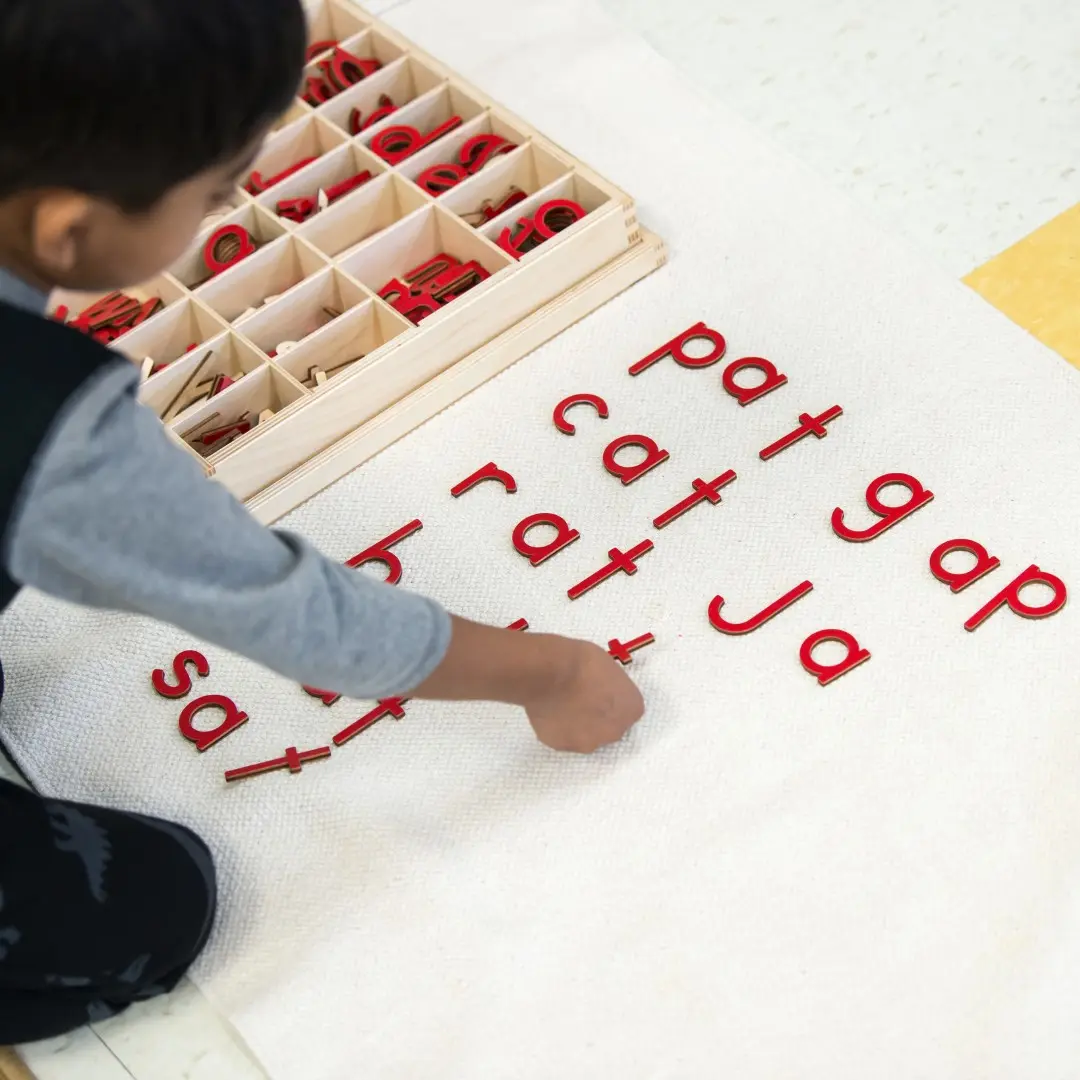
Early phonics, writing, & grammar.
The scientifically-designed Montessori literacy materials are unparalleled at separating out individual component skills (from phonemic awareness to recognition of letter symbols to pencil control) and tailoring materials that develop each in parallel, then bring all together in tandem.
Each child is different, but on average children learn to write and read around 4.5 years of age. They progress to advanced language and grammar work by the end of what would traditionally be called Kindergarten (at a time when children in most conventional programs are still coloring in a coloring sheet of the “letter of the day”).
A strong foundation in math & geometry.
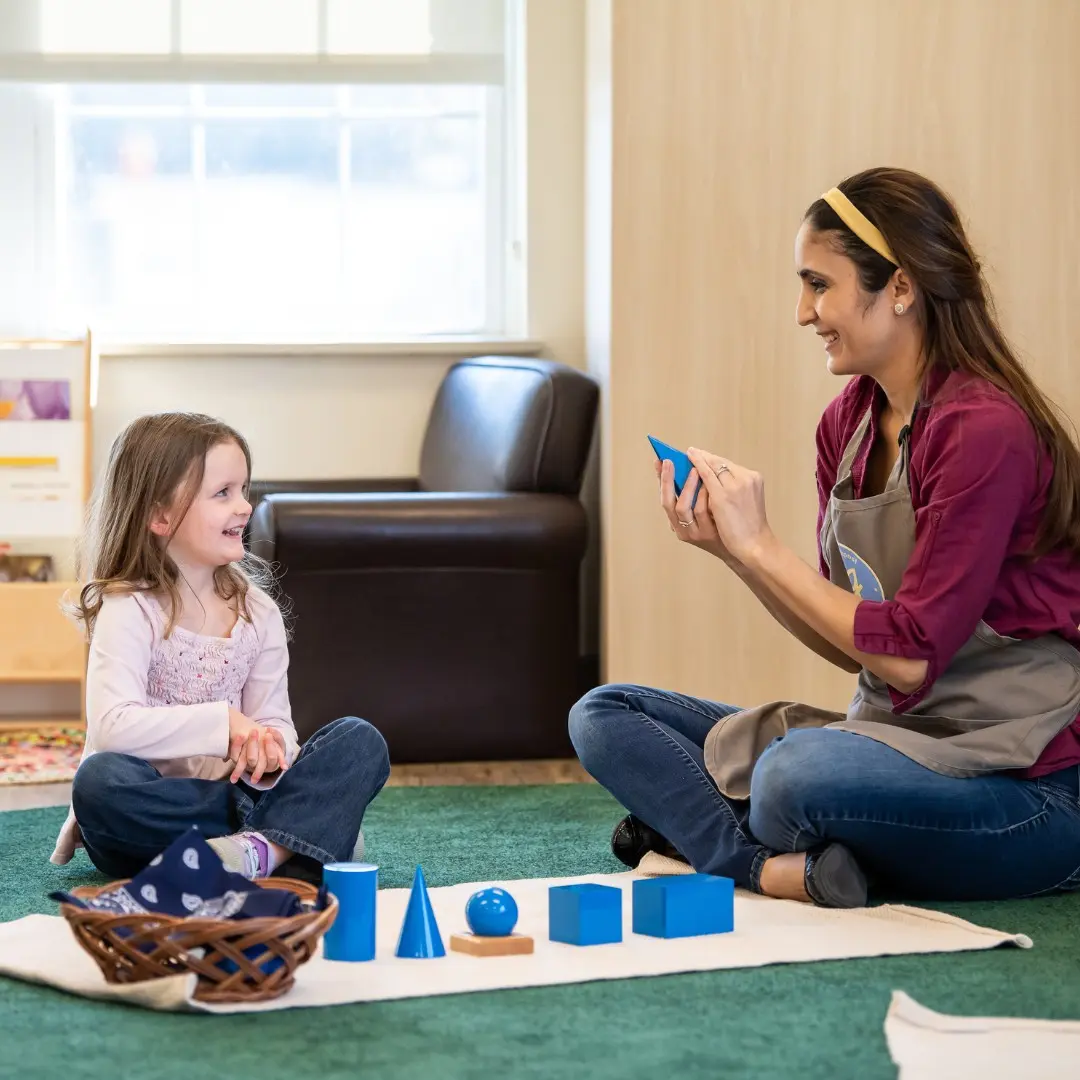
Math shouldn’t feel like a game of pretend—it should explain real relationships in the world that every child can independently observe, analyze, and categorize.
Our hundreds of sequenced math materials target one, individual concept or skill at a time, starting with training the senses to enable a child to see fine distinctions and make comparisons, preparing the mind for counting and mathematical measurement.
What’s more, children learn to love math—because the math materials are carefully aligned with their developing mind, and draw their attention to the inherent satisfaction and even humor that can be found in applying a mathematical lens to the world.
Leadership skills & a culture of excellence.
Because Guides (teachers) give children freedom to work independently and go at their own pace, and empower them to experience themselves as tremendously capable, there is an impressive culture of leadership and excellence in a Guidepost Children’s House.
The children respect each other’s ability to concentrate, celebrate everyone’s achievements, and seize the opportunity to mentor or be mentored by those at different points in their learning journey. By experiencing the learning process for themselves and seeing the different stages of learning and skills in their peers, children build an ingrained growth mindset—a view that they can always improve through their effort and creativity.
kindergarten at guidepost:
the capstone year.
In conventional kindergarten, the focus is on getting children acclimated to school, social dynamics, and formal learning for the very first time. But after already having years of practice with concentration, self-control, phonics, and math, children at Guidepost don’t want to be put on hold while others catch up—they’re hungry for a new challenge!
At Guidepost, kindergarten is the 3rd and final year, the “Capstone Year”, of our Children’s House program. It’s the year when children blossom as confident and excited readers, precise observers and mathematical thinkers, and helpful classroom leaders and mentors.
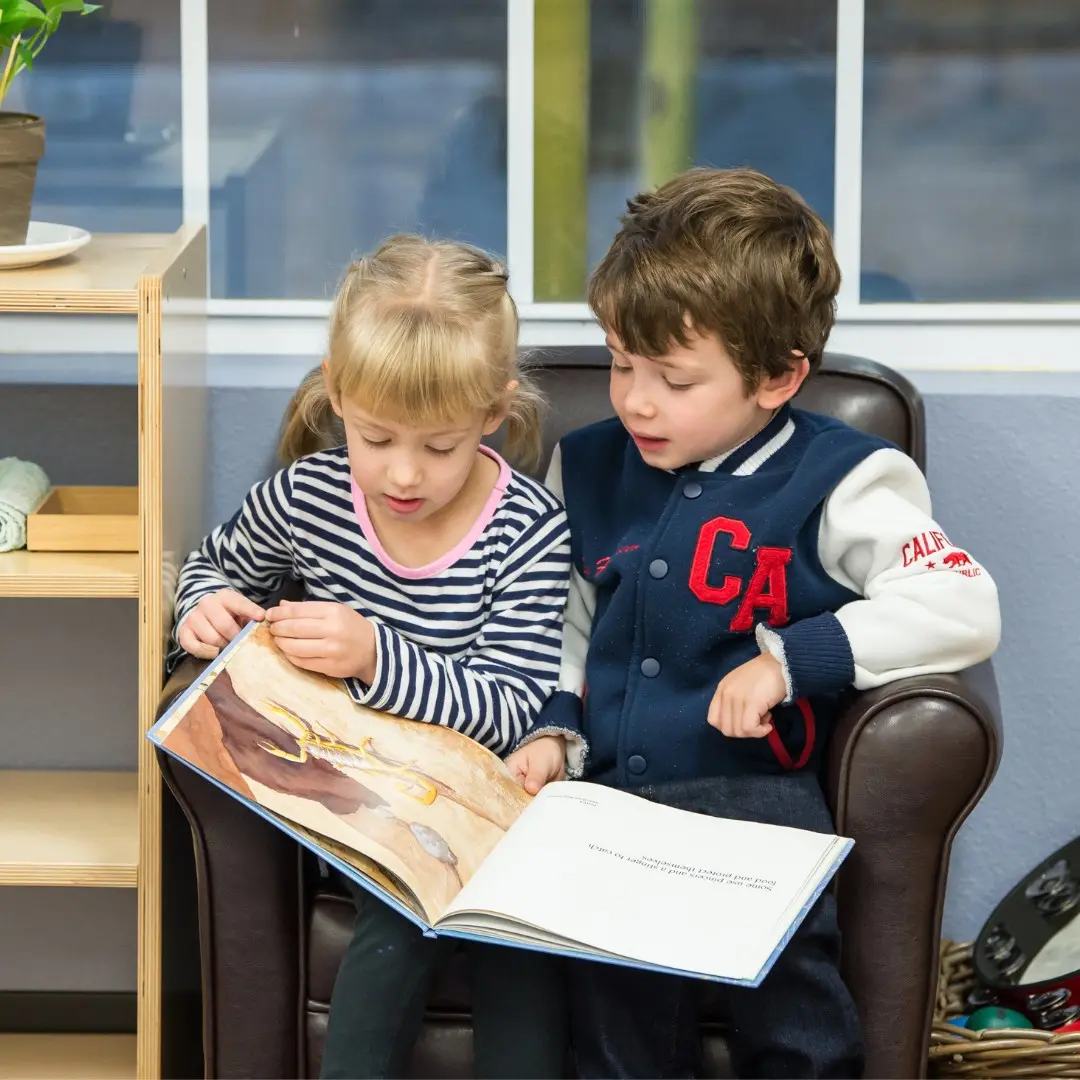
An explosion of literacy
In the capstone kindergarten year, children go beyond sounding out words and launch to the next level using:
- Decodable readers to read their first books & direct study of non-phonetic ‘puzzle words’
- Engaging games to learn the parts of speech and the structure of a sentence
- Sequenced vocabulary and “Word Study” activities to learn antonyms, homophones, and more
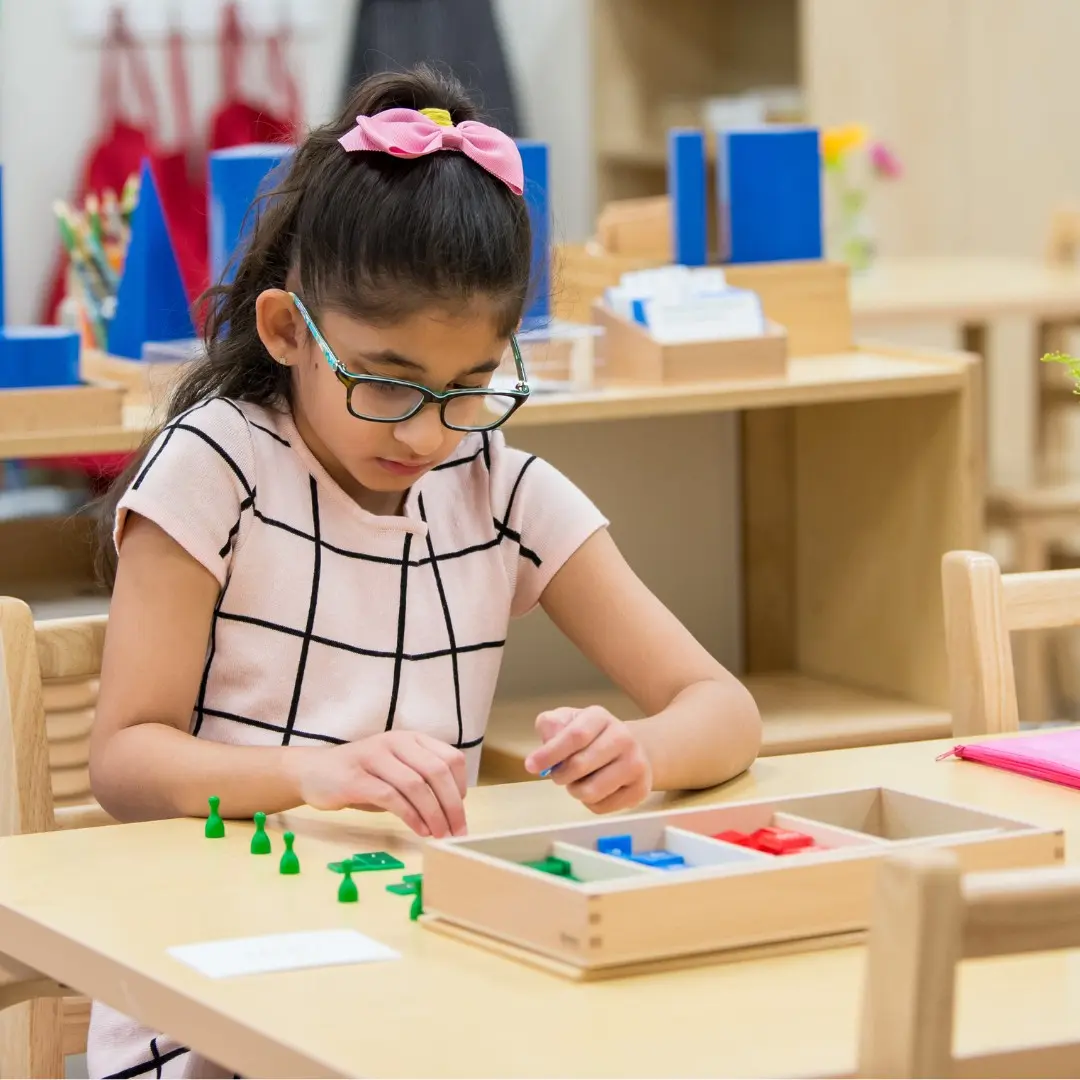
Advanced math
Following individual readiness, children in the kindergarten year make their mathematical understanding increasingly abstract, with:
- Engaging games to learn common addition and subtraction combinations
- Sensorial introduction and memorization of multiplication tables
- Multiplying and dividing 4-digit numbers (e.g. 1354 X 3)
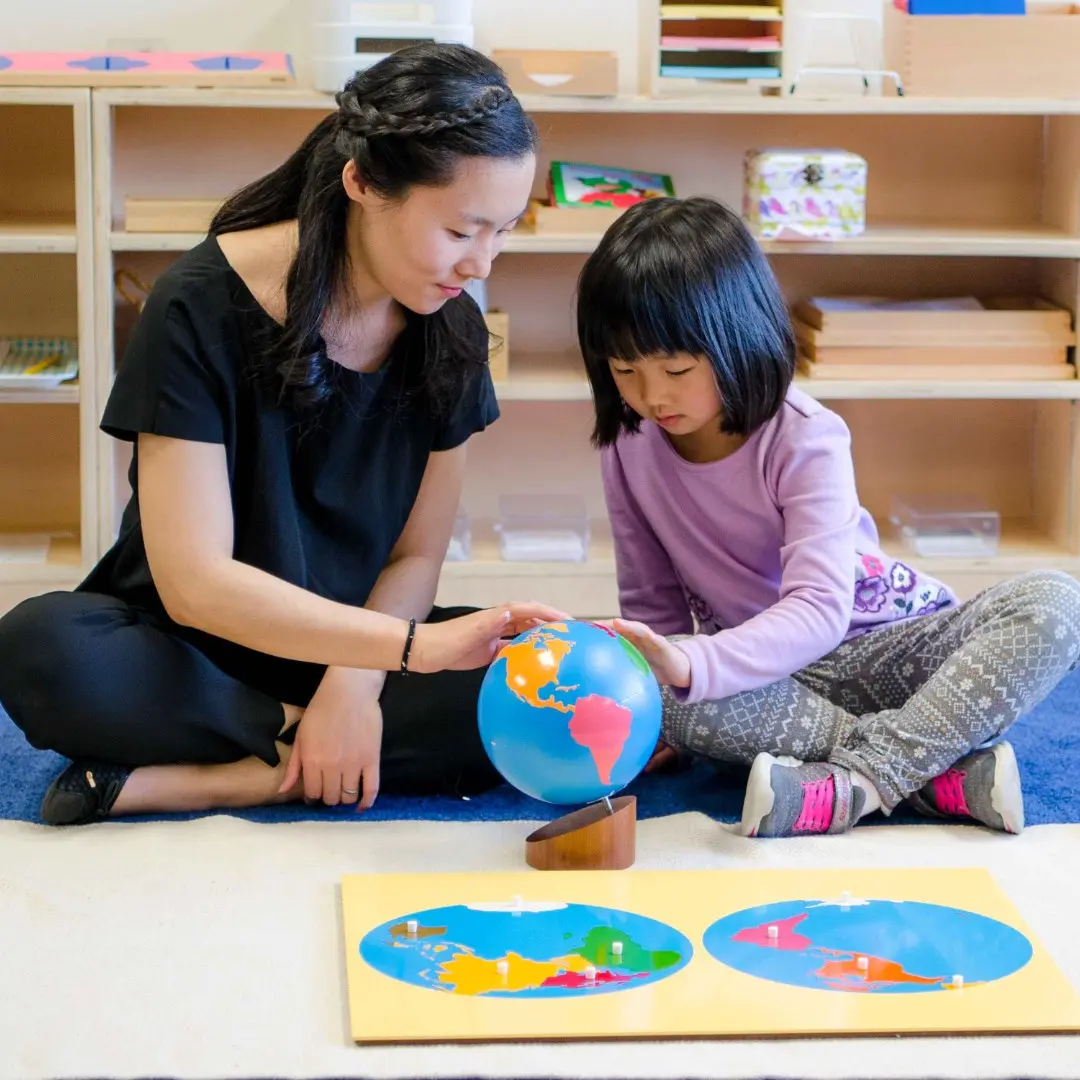
A strong foundation across subjects
In the Capstone Year, children become more ambitious in cataloguing everything they know across subjects. For example:
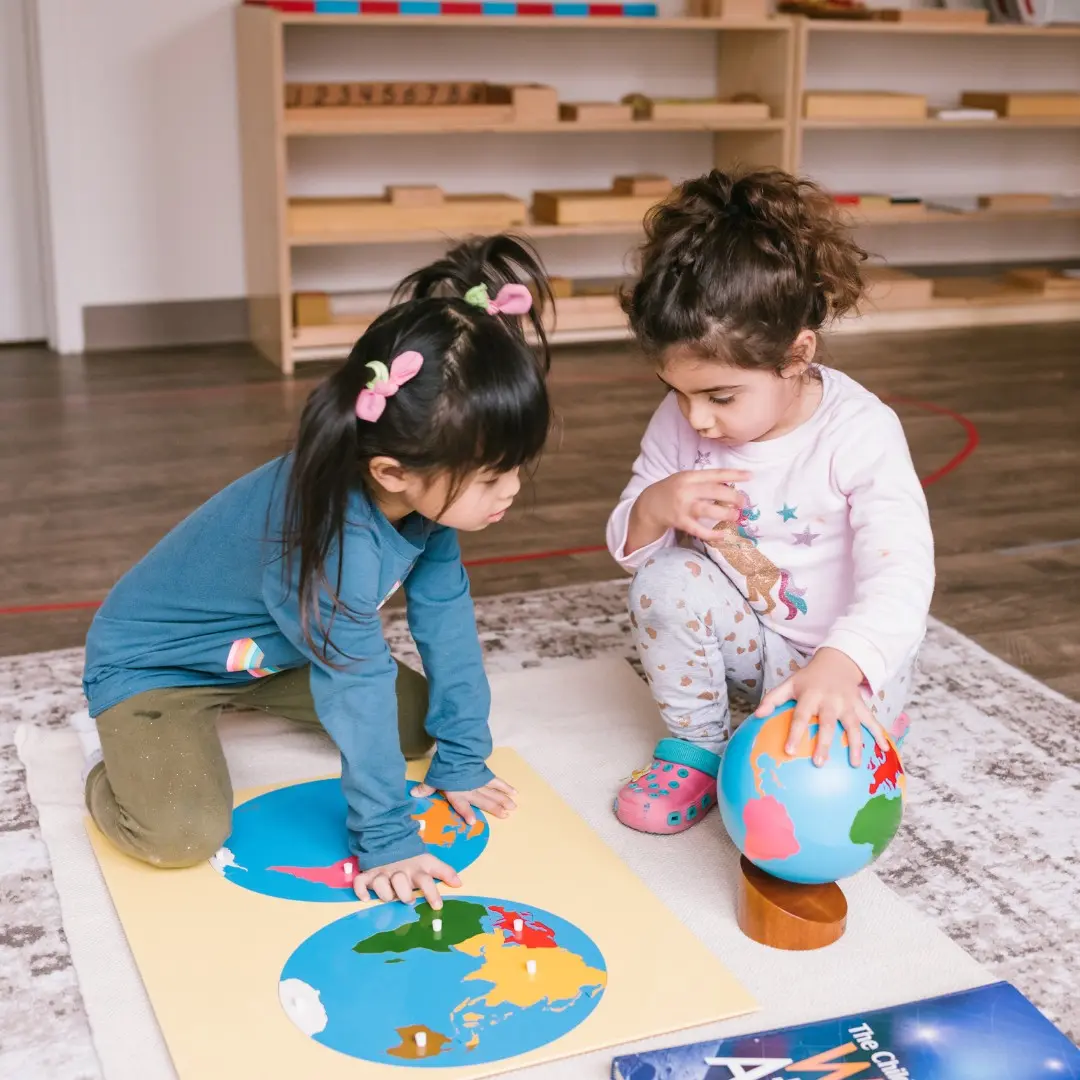
- Learning and labeling geography across the world
- Building plane figures from different angled triangles, developing a concrete understanding of equivalency
- Learning the vocabulary and written form of fractions
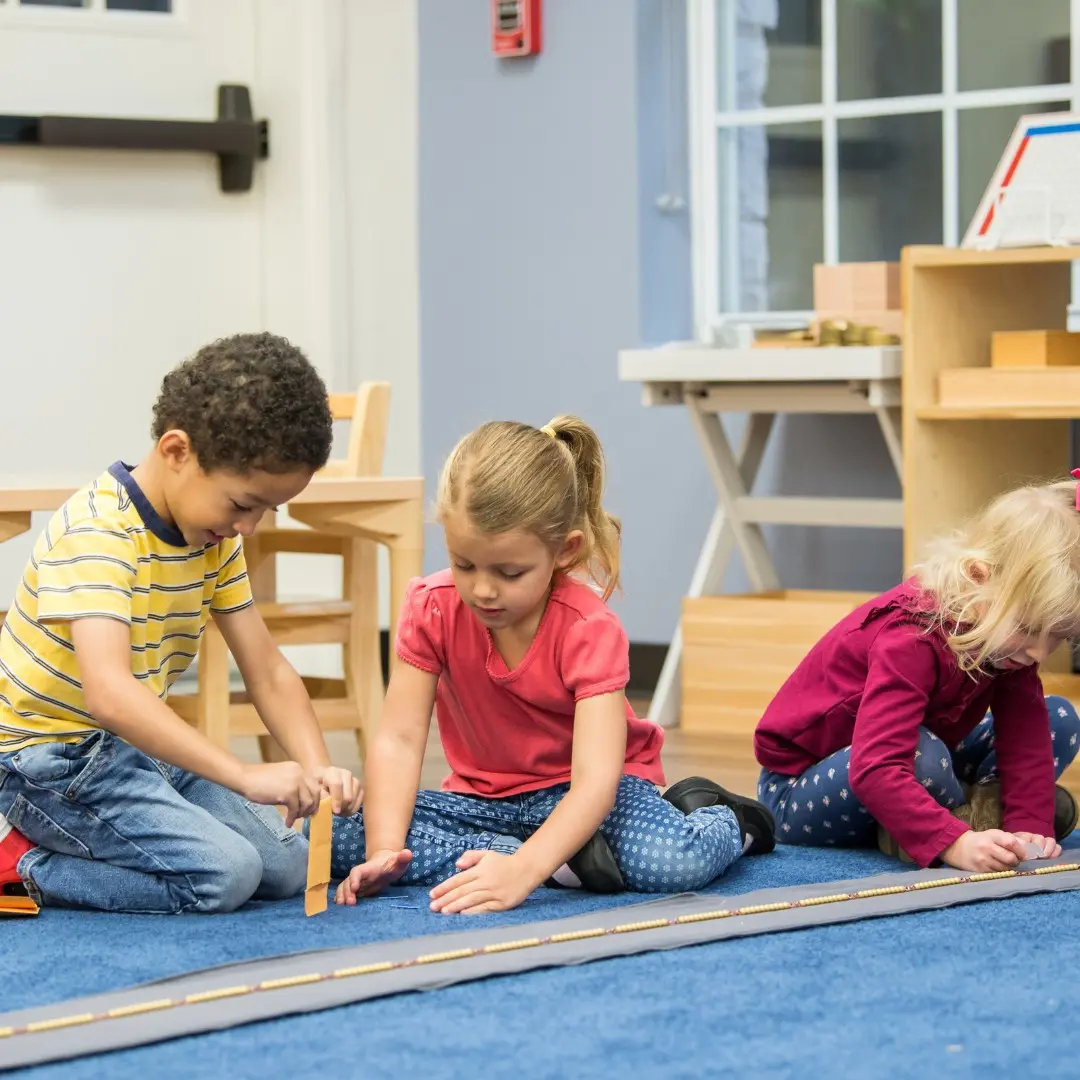
Leadership & collaboration
Kindergartners are the ‘big kids’ and leaders of the classroom; they build their leadership and collaboration skills through:
- Leading educational activities with their younger peers
- Welcoming new children into the class & sharing routines
- Participating independently in the life of the classroom in more advanced ways
a day in the life with Olivia.
In this video we follow Olivia, a Children’s House student, as she goes about her day at Guidepost Montessori.
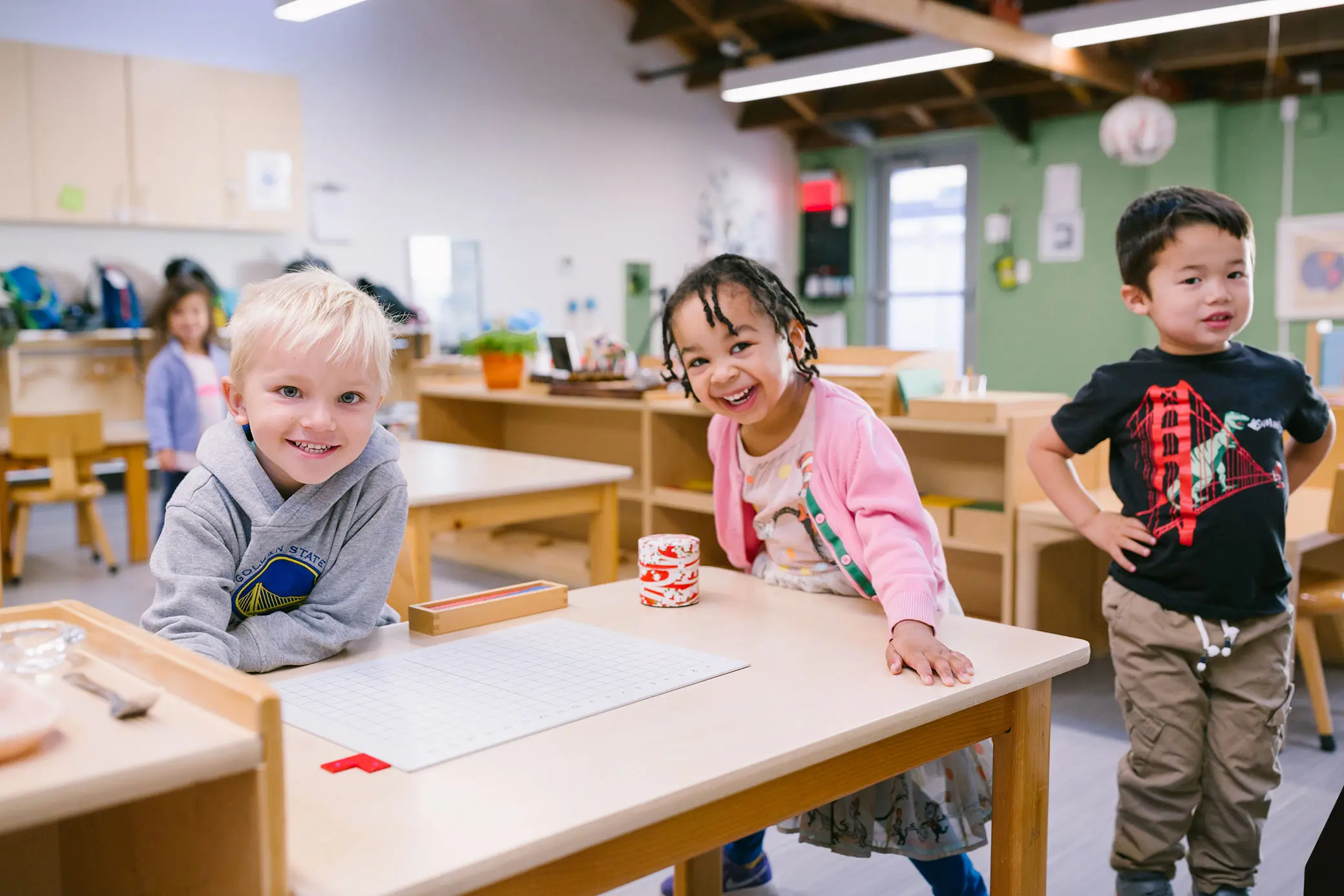
at guidepost montessori, we believe every child is tremendously capable.
But what’s even better, the children believe it too.
Every child at Guidepost Montessori knows they can accomplish real things and engage in real learning. Not because someone tells them so, but because they choose it, experience it, and succeed at it every single day.