Independence Through the Years: A Montessori Guide for Parents
Independence is one of the core gifts of a Montessori education. Parents often choose Montessori because they want their children to grow into confident, capable human beings.
What many families discover is that independence does not appear all at once. It is cultivated year by year through small, intentional experiences that allow a child to explore, act, and make meaningful choices.
Montessori guides understand that independence is not a skill to be taught in a single lesson. It is a way of designing a child’s environment, a way of speaking to the child, and a way of supporting the child’s natural drive to do things for themselves.
Childhood independence begins in infancy and continues through adolescence. When the home and school environments mirror one another, children flourish.
This blog can help you understand what Montessori independence looks like at every stage, what to watch for, and how to support that journey at home.
Whether your child is in Nido, Toddler House, or Children’s House, you will see exactly how independence unfolds and how you can nurture it with small, realistic steps.

Independence in the Nido Years: Building the First Foundations
Montessori begins with a profound belief in the capabilities of even the youngest child.
Infants are not passive beings.
They are deeply curious learners who absorb information through movement, observation, and repetition. In a Montessori Nido community, the entire environment is designed to give babies the freedom to explore safely.
What independence looks like in a Montessori Nido classroom
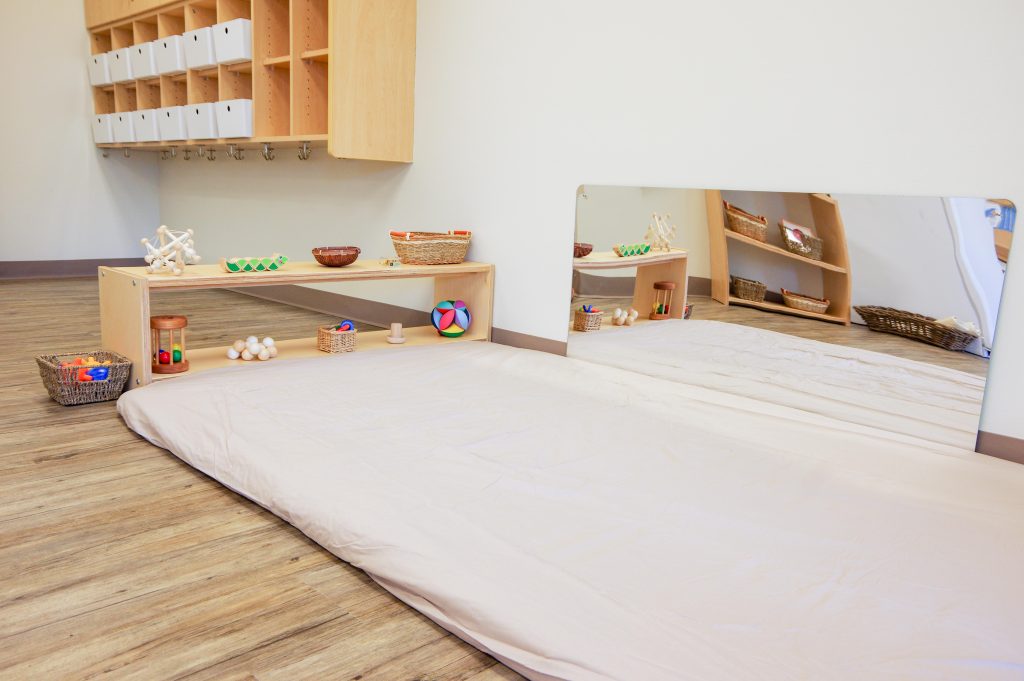
Infants sleep on low floor beds so they can roll, crawl, or move off the mattress on their own. This small detail creates a major shift in autonomy because the baby is no longer dependent on an adult to lift them in or out of a crib. Their sleep environment invites movement and independence.
During waking hours, babies spend time on textured rugs or mats where they can stretch, reach, and look around. Low mirrors support body awareness. Simple mobiles help strengthen visual tracking. Carefully curated shelves hold soft rattles, small grasping toys, and simple objects that an infant can choose as soon as they are physically able.
A Montessori guide observes closely. When a baby begins to reach for something, the guide makes sure the object is within view and within reach. The baby learns to act on their own curiosity.
How parents can support Montessori independence at home with infants
- Provide a safe floor space for movement rather than relying heavily on containers.
- Offer a few low baskets with simple objects instead of overflowing toy bins.
- Use a floor bed or a low sleeping space when possible.
- Allow infants small moments of struggle, such as reaching for a toy, turning toward a sound, or shifting their body to get comfortable.
These early experiences teach your baby that they are capable of acting on the world. That belief becomes the root of independence in the later years.

Toddler: “I can do it myself” becomes real
Toddlerhood is a period of explosive independence. The child begins to understand that they are a separate person from their caregiver.
They start testing limits and trying new skills. Montessori environments embrace this developmental shift rather than resisting it.
Everything in Toddler is designed to let the child do real tasks by themselves.
What independence looks like in a Montessori Toddler classroom
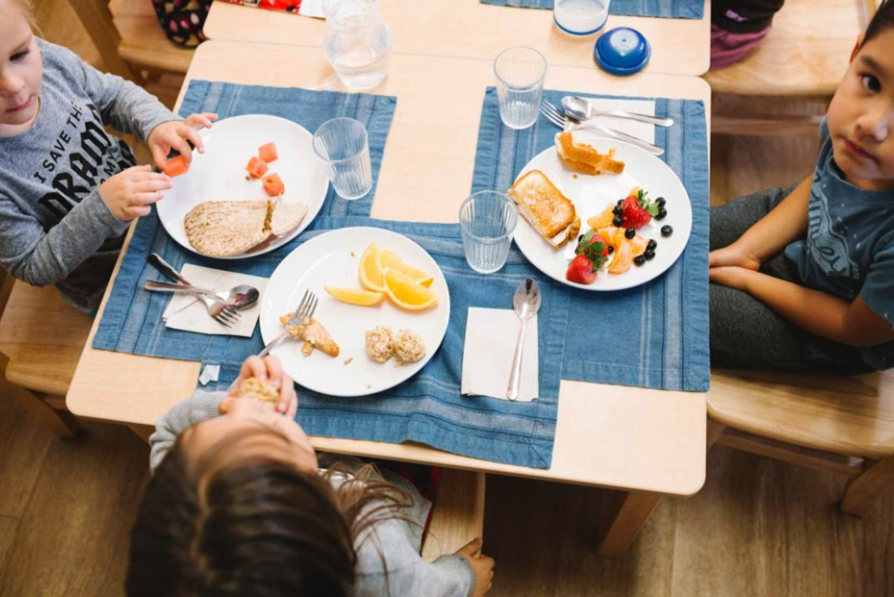
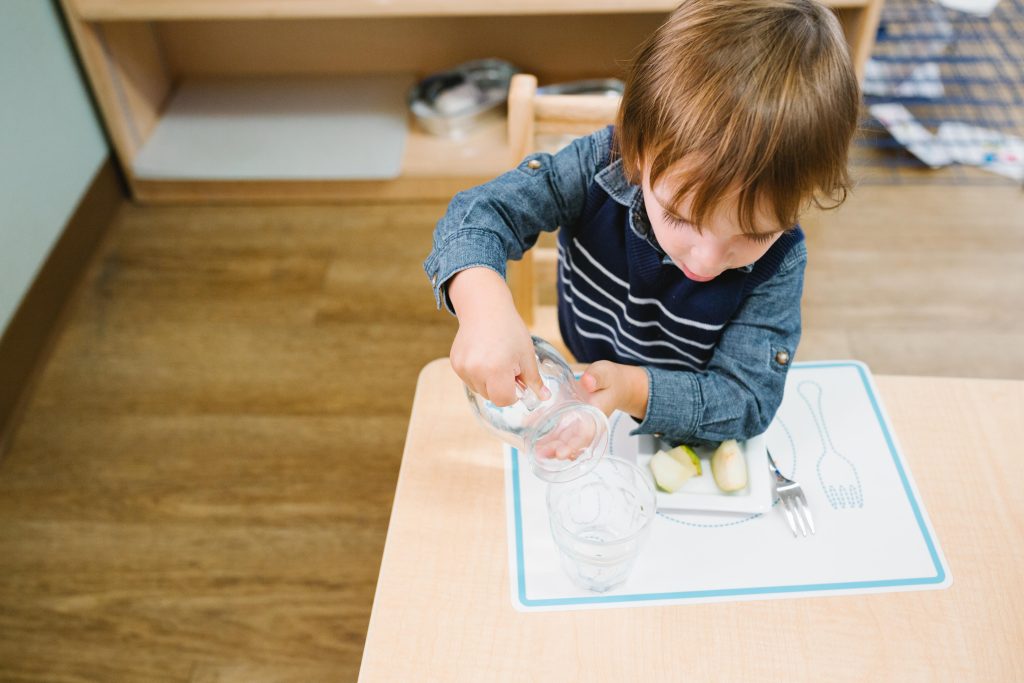
Toddlers learn how to dress, undress, groom themselves, wash their hands, set up snack, prepare simple foods, and care for their classroom environment. They also begin toilet learning in a consistent, calm, and respectful way.
These tasks are not chores.
They are lessons that build motor coordination, concentration, and pride.
In Toddler, the child chooses when to eat their snack and what material to work with. They follow a predictable daily rhythm that helps them understand time, transitions, and the idea of “first we do this, then we do that.” These experiences help toddlers build a strong sense of agency.
Signs of healthy Montessori independence in toddlers
- Showing interest in pouring water, washing dishes, or wiping a spill.
- Reaching for their own coat, shoes, or backpack.
- Choosing a book and carrying it to a grown-up.
- Insisting on trying things before asking for help.
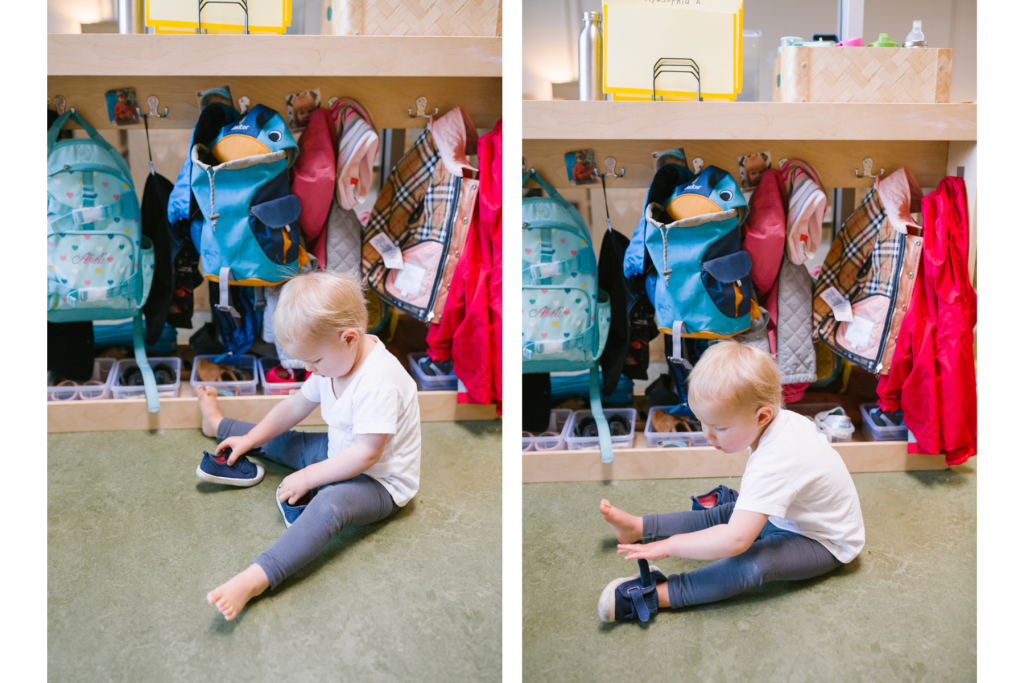
How parents can support Montessori independence at home with toddlers
- Keep belongings on low hooks or shelves so children can reach them.
- Allow extra time in the morning so your child can practice dressing.
- Invite your child to help with simple food prep such as slicing a banana or spreading something with a child-safe knife.
- Keep consistent routines so your toddler begins to understand the flow of the day.
- Treat spills and messes as learning moments instead of frustrations.
Toddlers often surprise parents with how much they want to contribute. When we respond with patience and trust, independence blooms quickly.

Children’s House: Intellectual independence rises
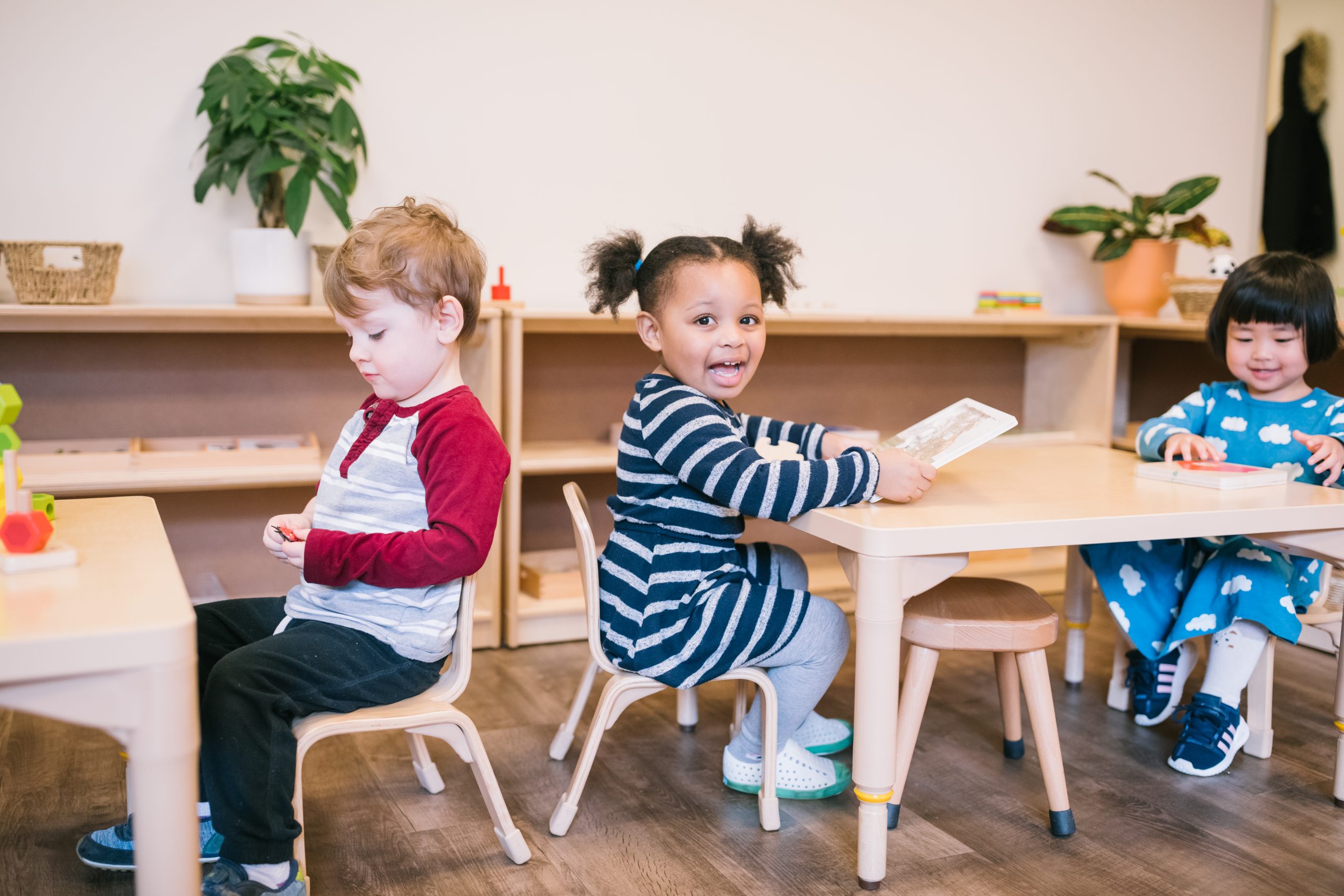
Children’s House, or what you might know as preschool and Kindergarten, is where academic and practical independence come together. The child’s world becomes larger. They are ready for deeper concentration, more challenging fine motor skills, and greater responsibility in caring for their classroom community.
Montessori guides teach literacy, arithmetic, science, geography, and art through hands-on materials that isolate one concept at a time. When a child learns to read or write, they gain new independence. They no longer rely on an adult to interpret the world for them. They can gather information, express ideas, and explore new interests.
What independence looks like in a Montessori Children’s House
Practical Life remains foundational. Lessons such as tying shoelaces, pouring water, washing a table, polishing wood, or caring for a plant give the child ownership of their environment. These tasks strengthen concentration and self-confidence.
Sensorial lessons teach the child to classify size, texture, shape, weight, and sound. This builds refined observation, an essential skill for scientific thinking.
Academic materials give children freedom to choose their work, repeat it, and return it to the shelf. A child may choose to trace sandpaper letters, build words with the moveable alphabet, or use bead materials to perform arithmetic operations.
By the final year of Children’s House, the child becomes a leader. They help younger classmates, show them how to roll a rug or carry a tray, and take pride in being an example for others.
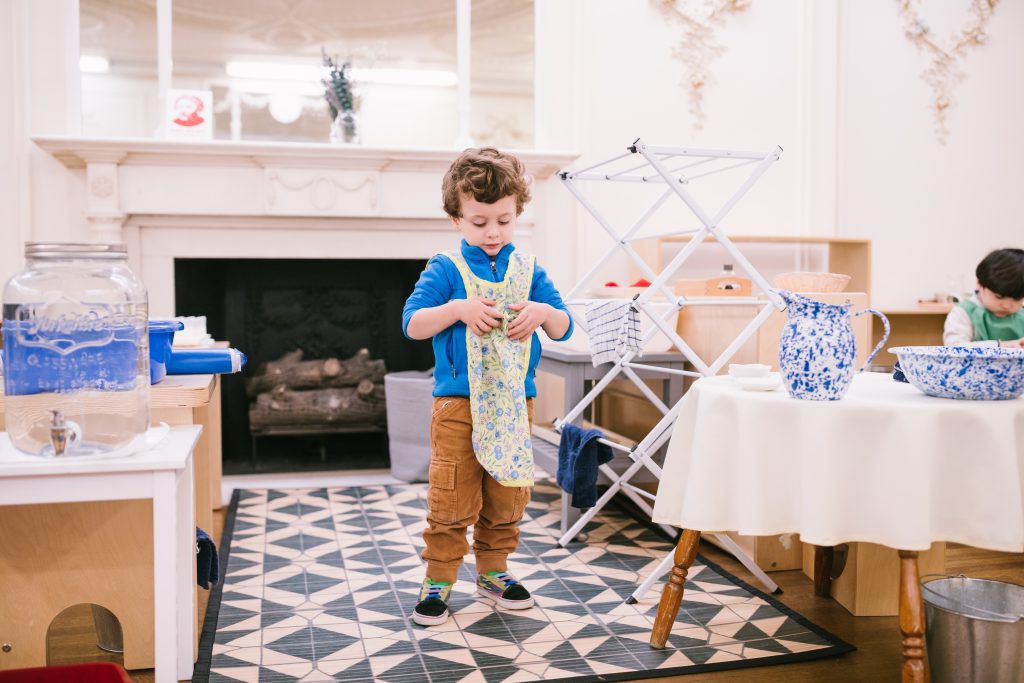
How parents can support Montessori independence at home during the Children’s House years
- Keep school routines calm and predictable.
- Offer real responsibilities like feeding a pet, helping set the table, or watering plants.
- Encourage your child to solve small problems before stepping in.
- Create a space for art supplies so your child can draw or write independently.
- Support reading by offering books at the right level and reading together daily.
Children in this stage thrive when adults give them clear responsibilities and trust them to follow through.

Why independence matters across the entire Montessori journey
Montessori education is grounded in the belief that children are naturally driven to become capable, responsible, and confident people!
Independence is not about pushing children to grow up too quickly. It is about giving them meaningful opportunities to practice life skills with support, respect, and realistic challenge.
When parents partner with schools, children receive consistent messages: you are capable, your choices matter, and you can contribute to your environment. This combination builds deep inner confidence.
The long-term benefits of Montessori independence
Research and classroom observations show that children who develop independence in early childhood often demonstrate:
- Strong intrinsic motivation.
- Effective problem solving.
- Creative thinking.
- Healthy social and emotional regulation.
- Responsibility for personal belongings and work.
- Confidence in new or unfamiliar situations.
- A love of learning that lasts into adulthood.
Parents often notice that children raised in a Montessori environment show initiative at home, help siblings naturally, and approach challenges with curiosity rather than avoidance.
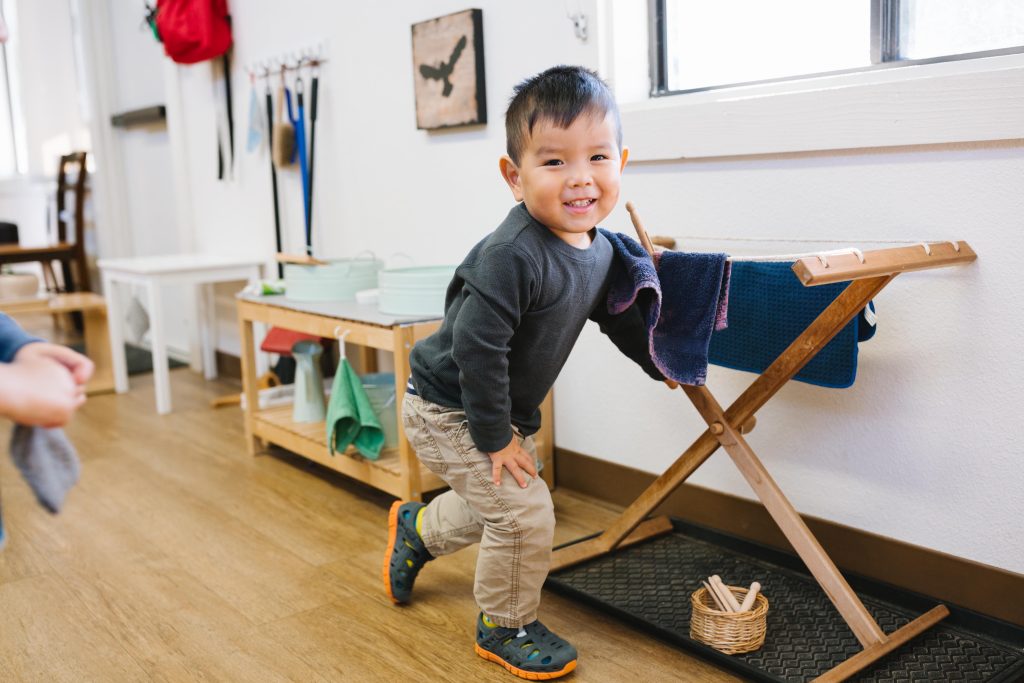

Montessori independence at home: realistic steps for every age
Parents sometimes feel pressure to replicate the classroom at home. That is not necessary. Montessori independence is not about creating a perfect environment. It is about offering intentional choices and trusting the child with real responsibilities.
Here are simple ideas that work for most families.
For infants
- Keep the environment simple and safe for movement.
- Offer one or two baskets of developmentally aligned materials.
- Allow the infant time for uninterrupted exploration.
For toddlers
- Present two clothing choices rather than a full closet.
- Let your toddler help with snack preparation, pouring, or wiping spills.
- Keep shoes, coats, and bags on hooks at their height.
For Children’s House
- Give daily responsibilities such as clearing dishes or organizing art supplies.
- Create a cozy reading corner with a few accessible books.
- Support self-care skills such as brushing hair, folding small laundry items, or packing their school bag.
Final thoughts: Independence is a lifelong gift
Montessori independence is not a trend or a teaching trick. It is a philosophy of childhood that believes deeply in the potential of each child.
From the first movements of infancy to the thoughtful planning of the elementary years, children thrive when they are trusted, guided, and given room to grow.
Independence is not only a school value. It is a life skill that shapes confidence, resilience, leadership, and joy. Montessori offers children the chance to build these qualities every day. When families join that journey, the results are remarkable.
We hope that this guide helped you understand what independence looks like at each stage, and how making small changes at home can help your child develop a strong sense of self, a solid foundation for learning, and a lifelong love of contributing to the world.