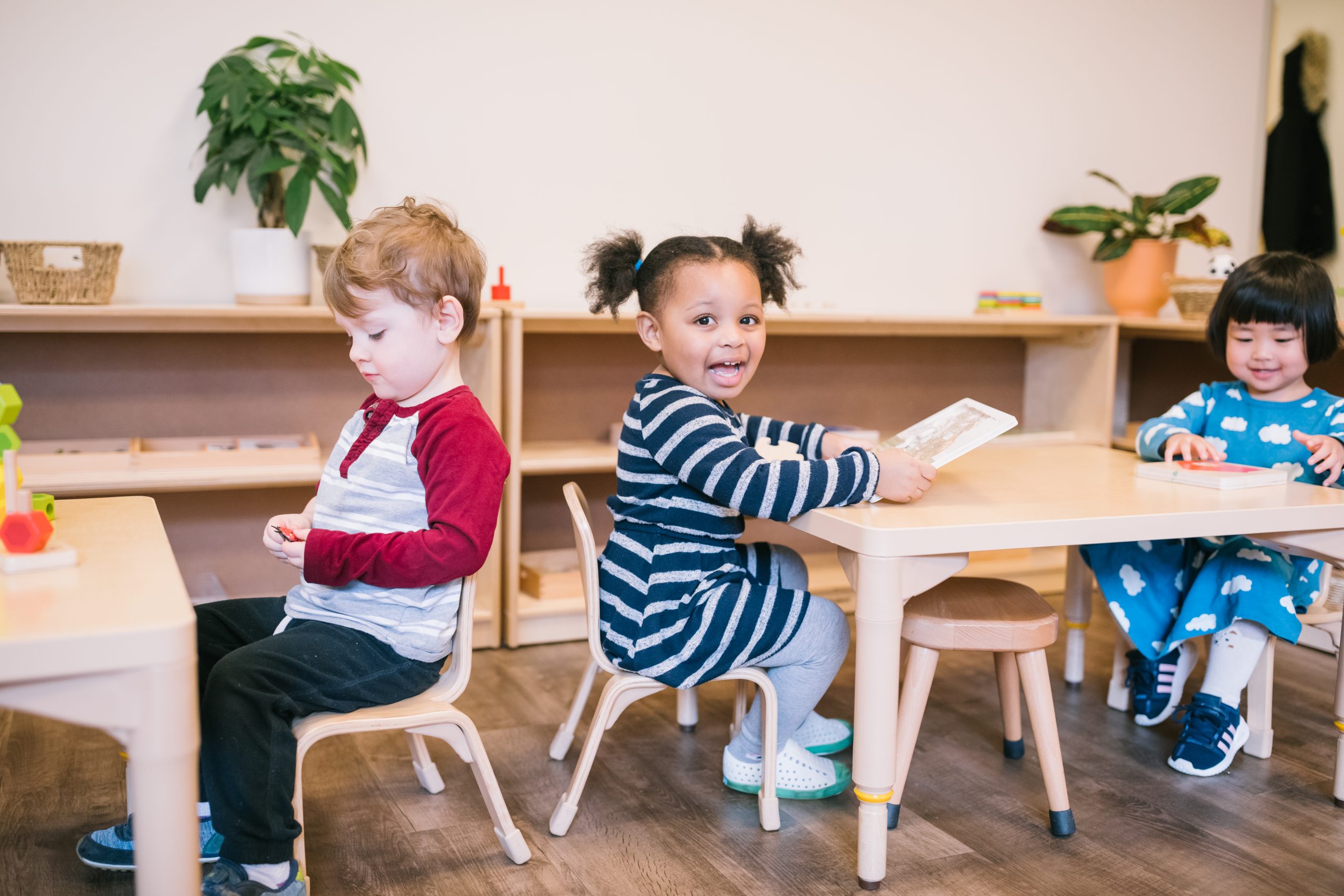
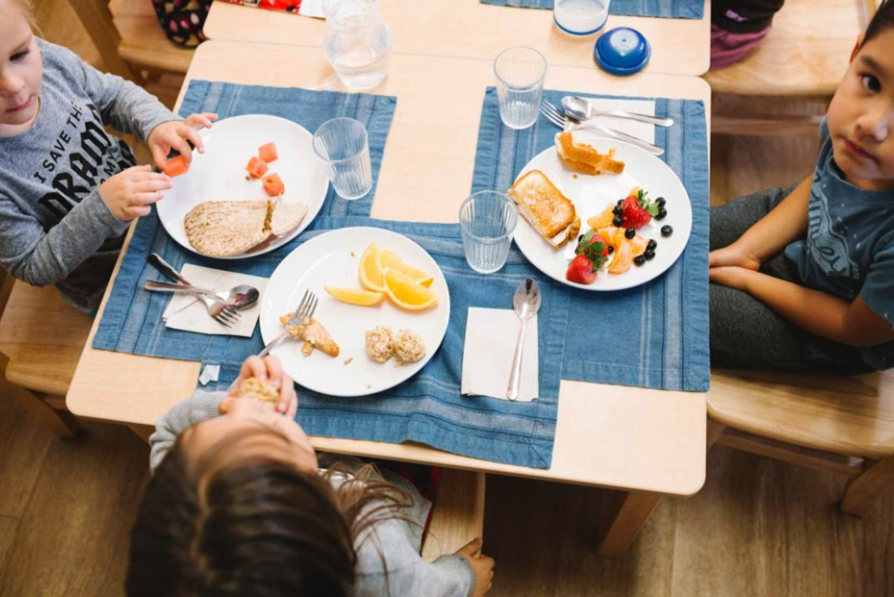
If you have ever watched your child pause before speaking, offer a snack to a friend, or gently walk around someone’s work on the floor, you have witnessed something powerful.
These moments are not accidental.
They come from a part of the Montessori curriculum known as Grace and Courtesy, a set of small but meaningful lessons that help children understand how to live peacefully with others.
Grace and Courtesy is not about perfect manners. It is about giving children the tools they need to communicate, cooperate, and feel confident in social situations.
Parents often ask us what this looks like during the school day and how they can support it at home.
The answer is both simple and fascinating!
Children learn social behavior the same way they learn everything else in Montessori. They watch, absorb, and imitate what the adults around them model every single day.
Here is a closer look at what your child practices at Guidepost and how you can bring the same atmosphere into your home.

Inside the Guidepost Classroom: Grace and Courtesy in Action
In all three of our programs—Nido, Toddler, and Children’s House—social learning is intentional.
Guides present short, beautiful demonstrations during calm moments. Children then use these skills throughout the day with surprising ease.
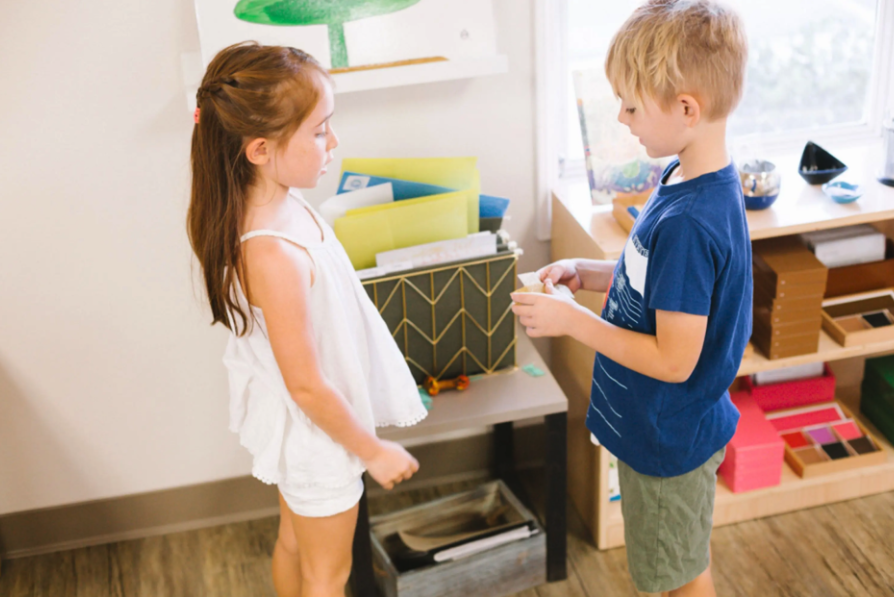
In Nido and Toddler (infants to age three)
Before children have full language, they learn social behavior through movement, imitation, and routine. Their Grace and Courtesy lessons include:
- Courteous Greeting and Goodbyes
- Watching Others Work
- Walking around a Rug
- Sitting in a Chair
- Carrying a Chair
- Carrying a Stool
- Wiping a Spill with a Paper Towel
These are the building blocks of community life. A toddler carrying a chair with two hands is not just performing a task. They are practicing respect for space, coordination of movement, and awareness of others.
In Children’s House (ages three to six)
Children are in a sensitive period for social order. They want to know how to behave and how to belong. The Grace and Courtesy curriculum includes:
Communication skills
- Greeting
- Introducing
- Offering
- Giving and Receiving Compliments
- Inviting Someone In and Inviting Someone to be Seated
- Interrupting
- Observing Someone
Community awareness
- Making Way for Someone to Pass
- Picking Up What Someone Let Fall
Caring for the body
- Blowing Nose
- Sneezing and Coughing
- Yawning
- What to Do When Hurt by Someone
These lessons help children move through their classroom with quiet confidence. They learn how to join a friend at a table, how to wait before speaking, and how to care for others in a respectful way.

What This Means for Life at Home
Parents often wonder, “How can I reinforce what my child learns at school without turning my house into a classroom?”
The good news is that you do not need to teach formal lessons. You simply need to model the same thoughtful behaviors your child sees at Guidepost.
Here are three powerful ways to do that:
1. Narrate your actions in a calm, clear way
Children absorb language long before they can use it.
“Excuse me. I am going to walk past you.”
“I will pick this up since it fell.”
“I noticed you are working. I will wait until you are finished.”
This mirrors exactly what they hear from their guides.
2. Invite cooperation rather than command it
Montessori Grace and Courtesy is never forced. It is offered.
“Would you like to help me give a compliment to Dad for cooking dinner.”
“I am going to set the table. You may join if you like.”
Children respond beautifully because it feels collaborative rather than corrective.
3. Use playful practice for tricky social skills
Interrupting is a perfect example. Children do not mean to interrupt. They simply act before they think. Practicing during a neutral moment helps tremendously.
Try a short “Snack Café” game.
You ask, “Excuse me. Would you pass me a snack please.”
Then invite your child to try.
The tone stays light and the learning goes deep.

The Secret of Grace and Courtesy
Children become respectful, empathetic humans not because someone tells them to be polite, but because they see adults living politely with others.
Montessori gives them the language and structure. Home gives them the heart and atmosphere.
When families and schools work together with the same spirit of calm modeling, children flourish. They learn how to communicate with kindness. They learn how to care for their community. They learn how to move through the world with self-respect and respect for others.
These lessons stay with them for life.