
Why we think Montessori is expensive
For many parents, the search for early childhood education starts with one feeling. The desire to give their child a better beginning than they ever had themselves. They want a place where their child is safe, cared for, intellectually stimulated, emotionally supported, and developing skills that will translate into the real world, not just memorized for short term academic output.
So they look at Montessori. And then they look at tuition. They pause, because they think Montessori is expensive.
Montessori tuition often sits at the top end of early childhood pricing. When parents compare Montessori to daycare or preschool around them, Montessori programs tend to cost more. This is where the uncomfortable question many parents hold internally becomes loud:
Why is Montessori so expensive? Is this real value or is this just a niche brand premium?
At Guidepost, we take this question seriously. Because we believe that cost should be transparent, value should be explained clearly, and families deserve to understand precisely what they are investing in. This is not a luxury style tuition model. Montessori is a fundamentally different educational model that takes more to deliver well and gives significantly more in return.
We are going to break down the real reason Montessori costs more than traditional early childhood programs. Then we will show why Montessori is actually not just more expensive. Montessori is more cost effective long term when outcomes are measured beyond age five and across a lifetime of skill formation. Finally, we will share why Guidepost has recently doubled down on strengthening program outcomes and child milestones while raising overall child outcome quality and parent satisfaction, all while protecting the integrity of the model proven by research.
This topic matters. Because when you understand why “Montessori is expensive”, the entire frame shifts. The conversation moves from price to value. It moves from monthly tuition to your child’s lifetime developmental return. And it moves parents from fear based comparison shopping to confident, informed education decision making.
Montessori is fundamentally different than traditional preschool
Most traditional preschool models are childcare centric. Their primary goal is to keep children safe, supervised, and socially engaged. These programs vary in quality, but the underlying structure is relatively similar. Caregivers run the classroom. Children follow the group agenda. Activities are whole group led or caregiver directed. Children work at the same pace. The classroom adult determines most of the scope, sequence, initiation and pacing of learning.
Montessori flips this model.
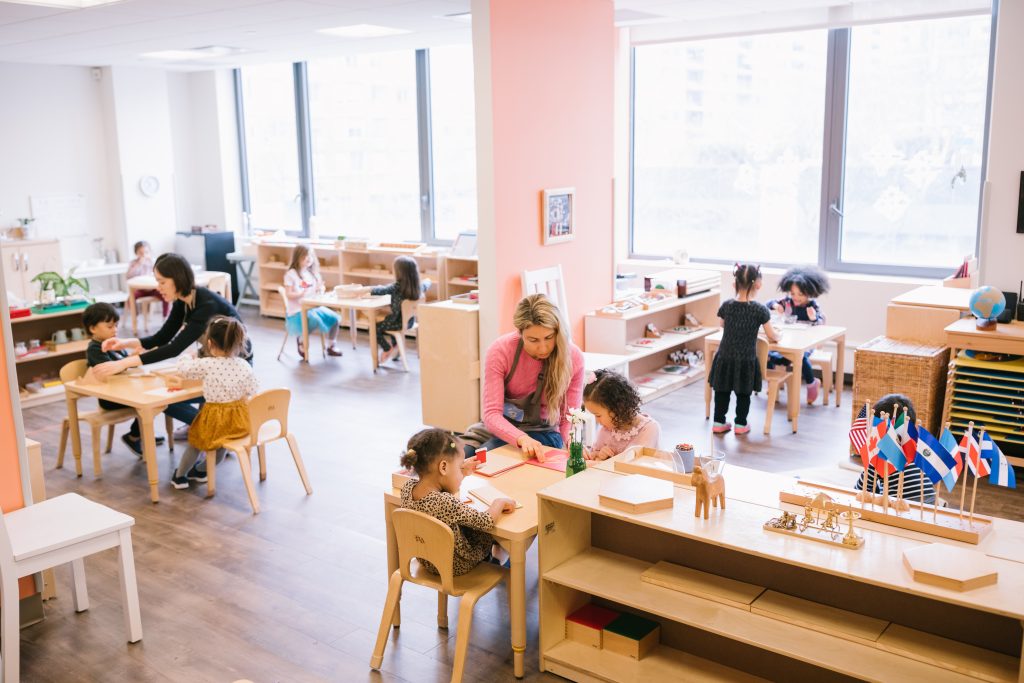
Montessori classrooms are designed as a prepared environment where children can independently explore tangible, scientific, carefully sequenced learning materials. The materials have embedded control of error. The classroom is built around autonomy and developmental order. The teacher is not an instructor at the center of the room. The teacher is a trained guide who observes, individualizes, and supports learning as a scientific process.
This single shift requires more. More expertise. More development science. More intentionality. More environment structure. More assessment of readiness and timing. Because Montessori is actually teaching the underlying executive functions in children that create a long term academic advantage. Not just surface level pre-academic exposure.
It costs more because it does more and because it creates more.
Not in the short term only. In the long term trajectory of a child’s life.
What actually drives the “Montessori is expensive” theory
1. The scientifically designed Montessori materials
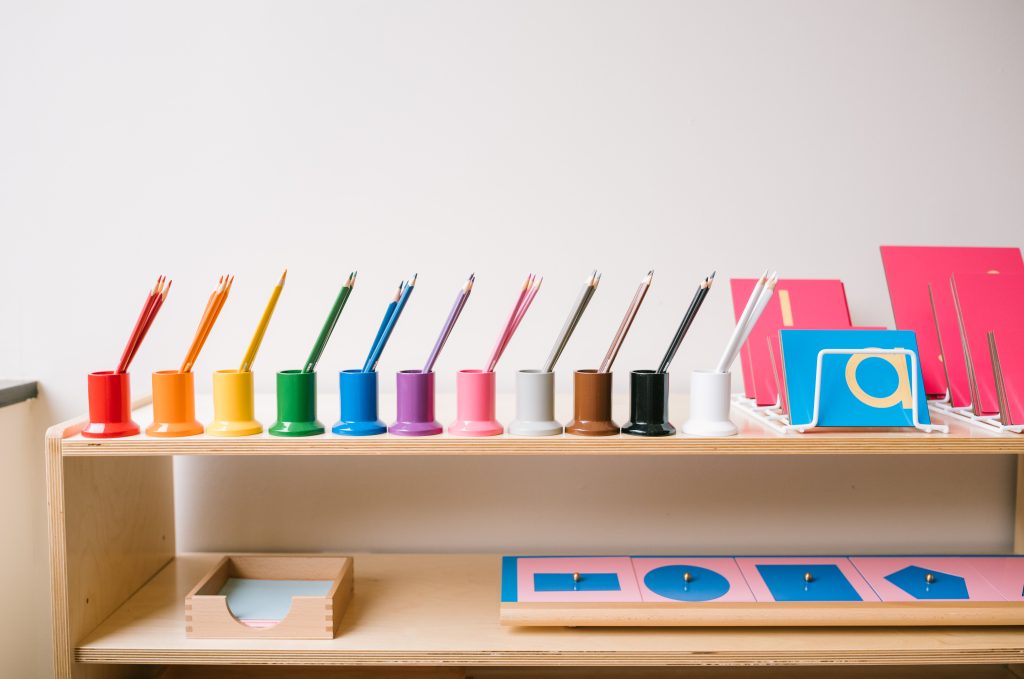
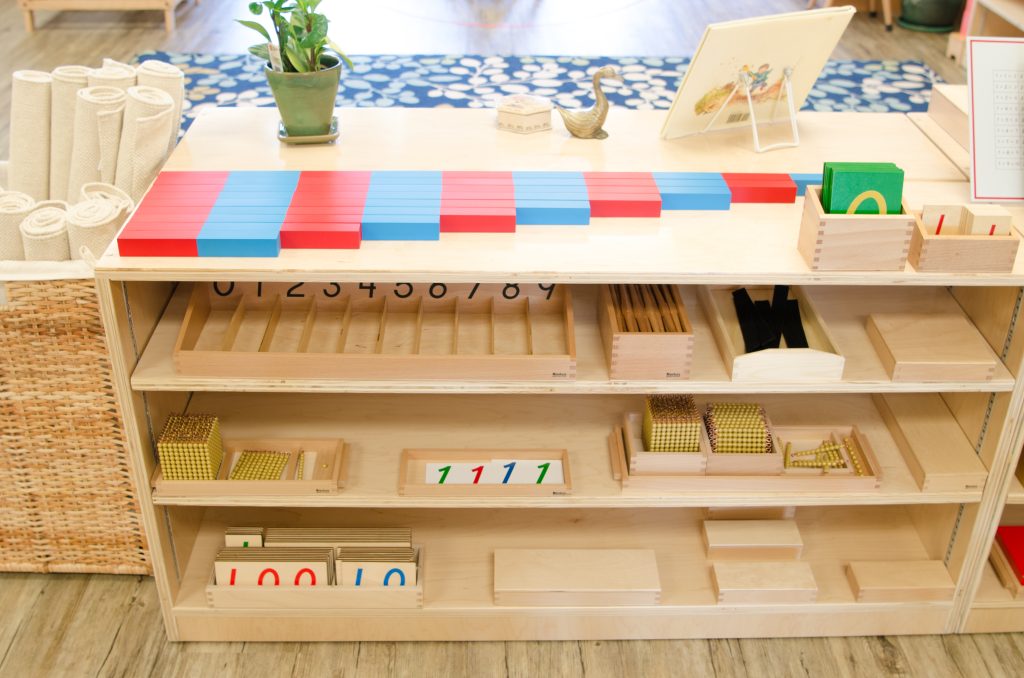
Montessori materials are not toys. They are not store bought puzzles, plastic shapes, or basic manipulatives. They are precision mathematical and sensorial instruments created to isolate specific developmental concepts. Materials like the Pink Tower, golden beads, metal insets, binomial cube, and moveable alphabet are not made cheaply, and they cannot be replaced with imitation toys from the likes of Fisher-Price and still produce the same neurological impact.
These material sets are expensive to make, expensive to replace, and require care and rotation. They are durable materials because they are used daily by small children. They must withstand heavy physical use but remain completely precise so that the child encounters the same scientific sensory experience each time they work.
Traditional preschool materials do not require this level of precision.
2. Teacher Training and High Fidelity Montessori Practice
Montessori teacher preparation requires a very different level of expertise than most early childhood or preschool programs. Montessori guides complete specialized certification that includes deep developmental study, lesson sequencing, classroom observation hours, and supervised practice. They learn hundreds of individual material lessons. They learn how to scientifically observe children. They learn how to guide through developmental readiness rather than through generic curriculum pacing. This is cost, but it is productive cost. You are paying for expertise that actually changes how children learn.
At Guidepost, every classroom is led by trained Montessori guides who are grounded in observation, independence, and the prepared environment. Many of our guides are trained through The Prepared Montessorian Institute, our MACTE-accredited training institute. Others arrive with credentials from respected organizations including AMI, AMS, or regional programs such as TAI in Asia. What matters most is that every lead guide is formally trained, certified, and supported by a standardized training pipeline that ensures consistency across our entire network.

Parents often ask how we know a child is learning if they can choose their own lessons. Freedom always exists within structure. Guides observe and track every child’s progress daily and introduce new lessons the moment a child is ready. This allows children to work independently inside clear boundaries that foster concentration, mastery, and confidence at their own pace.
We measure readiness through Montessori based progress benchmarks and ongoing observation. Families receive continuous updates through classroom communication, the Illumine parent app, and milestone check-ins. This level of training and tracking ensures that Montessori is not a free-flow environment. It is structured scientific education delivered through highly trained professionals.
3. Prepared environment maintenance
Montessori classrooms require ongoing material order, rotation, environment resetting, and classroom curation. This is not a one time classroom setup.
Montessori guides spend significant time analyzing which materials each child is ready to use and which materials need to be introduced next. This environment maintenance is part of the pedagogy. It is how children build independence, self direction, concentration, and academic acceleration.
Traditional preschools do not have this structural labor requirement.
4. Multi age classroom structure
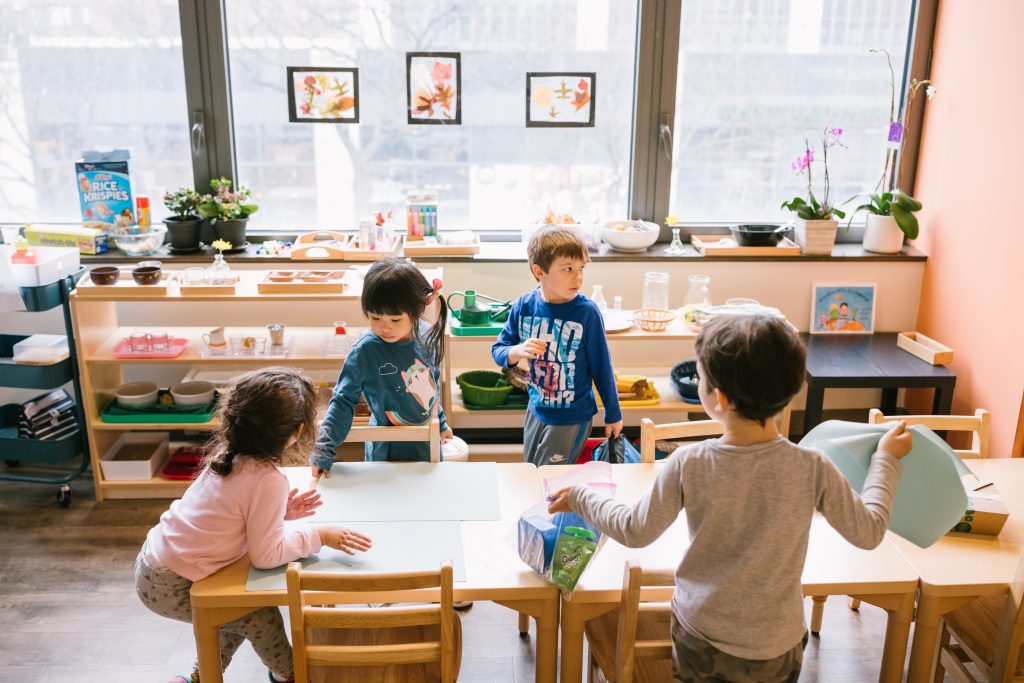
Beginning in the Children’s House program, Montessori places children in three year age groupings. This structure allows older children to teach and model skills for younger children, which strengthens mastery for both groups. Younger children naturally absorb more complex work by observing peers who are slightly ahead of them developmentally.
This mirrors real life social learning and prepares children for environments where ages and skill levels are mixed. It also requires higher staffing competency, deeper observation skill from guides, and greater classroom design intentionality than single age cohorts. This adds cost, but it directly contributes to deeper learning, stronger peer based growth, and more authentic developmental progress.
What Montessori tuition includes that traditional preschool does not
Montessori tuition is not paying for more supervision. It is paying for deeper cognitive and developmental construction that will translate long after preschool ends.
Montessori builds:
- executive function control
- concentration and sustained attention
- intrinsic motivation
- emotional regulation
- patience and resilience
- self confidence and personal agency
- phonetic based literacy formation that aligns with the science of reading
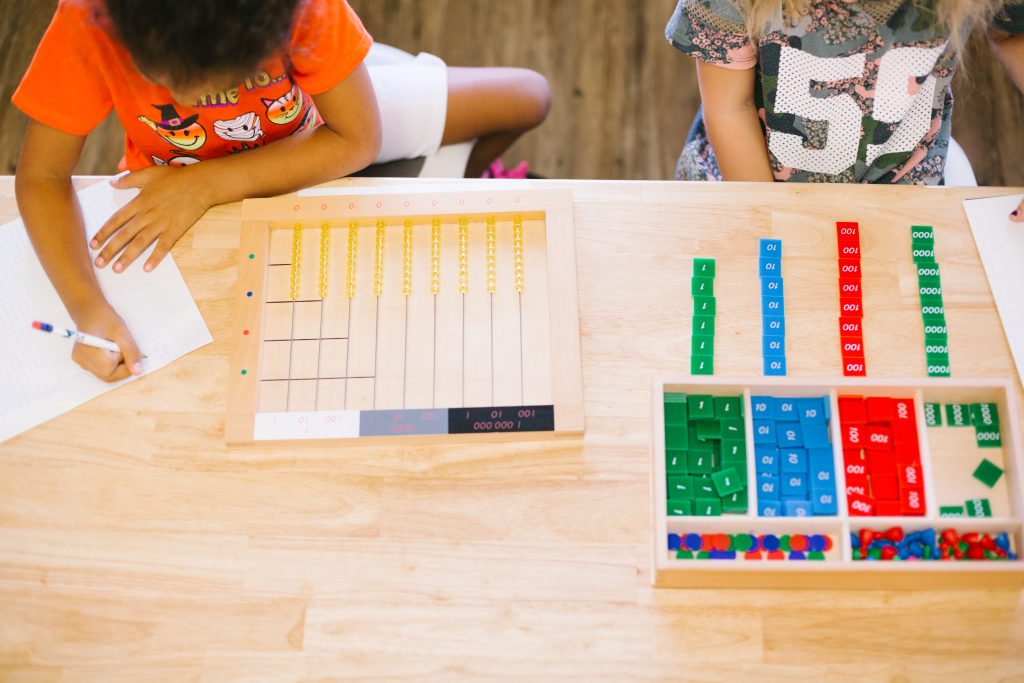
- conceptual based math understanding rooted in quantity and place value
- scientific method style thinking through experimentation and material feedback
- independence and self direction skills
Most parents assume that Montessori is simply a nice alternative school format. Montessori is not style. Montessori is a cognitive formation model that builds the architecture of how a child learns at the deepest levels.
This is the real value. Not the furniture. Not the brand. Not the aesthetic.
It is the neurological architecture that becomes the foundation for later academic success.
Montessori versus traditional childcare economic comparison
If you only compare month to month tuition, Montessori looks more expensive. This is the short horizon comparison most parents make when they are evaluating preschool options. Childcare is priced on hours of supervision. Montessori is priced on developmental transformation.
When you evaluate long term outcomes, Montessori is not more expensive. It is more efficient. Children who build executive function, independence, concentration, intrinsic motivation, and mastery orientation early outperform later. They require less remediation. They require less push. Their learning is self propelled instead of adult managed. This creates compounding return.
You could even argue that this is the most important investment to make in a child’s entire academic life. College is a late stage intervention. By the time a young adult arrives at university, most of their habits, attention patterns, motivation type orientation, and cognitive architecture are already formed. The brain is the most malleable in the first six years of life, which is precisely where Montessori invests.
This is the difference between paying for short term supervision versus paying for the construction of how a child learns for life. Montessori is not just preschool. It is foundational brain building at the exact time when it matters most. Which ultimately makes it the more cost effective model, even when the monthly tuition number is higher.

Evidence: The national Montessori randomized controlled trial
We believe that parents deserve evidence. Not just ideology.
A recent national randomized controlled study across 24 public Montessori schools found that children who were offered Montessori seats scored significantly higher at kindergarten in reading, short term memory, theory of mind, and executive function compared to children who did not receive Montessori placement.
This is real field data. Not lab simulation. Not small pilot sample. This is randomized research in public school conditions, which is the gold standard.
The research also noted something surprising to many parents who assume Montessori must cost more structurally. Over three years, in the public sector implementation studied, Montessori cost districts less per child than traditional programs serving the same ages. This was due to structural efficiencies and the way Montessori uses child to teacher ratio differently in early years.
This flips the conversation entirely. Montessori is not expensive because it is inefficient. Montessori often costs more in private settings because it is high integrity implementation of a scientifically grounded model.
Why Montessori is misperceived as expensive instead of cost effective
Most parents compare schools on the wrong dimension. They compare based on short term tuition instead of long term developmental returning value.
Traditional preschool often looks cheaper on paper because it is simple to operate at scale. But it produces shallow short term output that does not sustain itself into elementary school. That means parents and schools often end up paying later. In academic pressure. In interventions. In frustration based learning cycles. In behaviors driven by disregulated executive function. In expensive remediation and tutoring later.
Montessori eliminates much of this future cost by building the underlying executive brain skill set early. Montessori tuition is an investment at the exact point where the brain is the most malleable, the most formative, and the most responsive to environment shaping.
Why Guidepost has invested in making Montessori more accessible
At Guidepost, we believe Montessori should not be limited to the few children whose parents can afford elite private school pricing. Maria Montessori’s original mission was to bring scientific education to the masses. Montessori began as a model for children with the greatest need and the least support.
Guidepost is the largest Montessori network in the world because we have taken that original mission seriously at scale. We have lived through challenge as an organization and those lessons have sharpened our clarity about what must endure and what truly matters. We have doubled down on the areas we know are sustainable, and that means student outcomes first. We have invested in operational efficiency, centralized training, material supply chain coordination, and platform based systems development so that we can lower the cost barrier and democratize access, while raising the quality of outcomes children achieve and protecting authentic Montessori practice.
Our goal is not to make Montessori expensive. Our goal is to make authentic Montessori accessible to more families so that more children can benefit from this type of developmental trajectory.
The real value for parents
Parents are not buying childcare hours. They are investing in the formation of the way their child learns for the rest of their life.
Montessori is expensive because it is not a low cost care model. Montessori is expensive because it is an investment in neurological development, emotional intelligence, human skill formation, literacy and numeracy foundations, and personal agency. And even then, in most markets, Guidepost is not drastically higher than the cost of a standard daycare program. The difference is often smaller than parents assume. We work hard to keep our tuition as reasonable as possible while still delivering a higher fidelity developmental model. The additional cost is directly tied to the level of quality, intentionality, and long term outcomes the program produces.
When families look at Montessori solely as preschool, they miss the real meaning of the cost. This is not buying time. This is purchasing opportunity.
Our final conclusion
Montessori is expensive because it requires more precision, more training, more structure, and more developmental intentionality than traditional preschool programs. But the research shows that Montessori also produces stronger long term outcomes by the end of kindergarten, particularly in reading, memory, theory of mind, and executive functioning.
When you take this into account, Montessori is not just an educational choice. It is an investment strategy for your child’s adult life.
At Guidepost, we believe that the true measure of early childhood education value is not what a parent pays monthly. The measure is what that child gains for life. When the science of Montessori is implemented with fidelity and supported by a prepared environment, trained guides, multi age community structure, and developmentally aligned material progression, the investment pays dividends far beyond the school year.
Above all, Montessori is powerful. Our role at Guidepost is to make that power accessible, sustainable, scalable, and available to the families who want more than care. They want transformation.