Why Parents Fall in Love with Our Guidepost Montessori Community
Every parent knows that the goal isn’t just to find a good school. It’s to find a Montessori community, a place that feels like a village. At Guidepost Montessori, that village is built through a trusted network of educators and families who walk alongside you through the early years of parenthood.
This month, we wanted to spotlight one of our campuses that truly embodies what it means to build that sense of partnership and belonging. At Guidepost Montessori Mahwah in New Jersey, Head of School Erika Cuellar and her team have cultivated a community that thrives on connection. From creative family events to thoughtful parent support, Mahwah is a shining example of how the Montessori philosophy extends beyond the classroom walls and into the hearts of families.
Here, education isn’t a transaction. It’s a partnership. From the moment families walk through the door, they sense something different: the calm order of the classroom, the quiet confidence of children working independently, the warmth of guides who greet each parent by name.
The Montessori community at Mahwah thrives on relationships. Parents find support not only from their child’s guides but also from one another, sharing experiences, celebrating milestones, and connecting through events, classroom moments, and daily conversations.
For many families, this sense of belonging becomes one of the most meaningful parts of their child’s Montessori journey. It’s what transforms a school into a community and an education into a lifelong connection.

“Parents don’t just come to us to take care of their child,” Erika says. “They come to us because they value what we have to offer them as well. A partnership.”

How We Partner with Parents
Parenting doesn’t come with a roadmap, and we believe no parent should have to navigate it alone. Our goal is to make sure families feel supported, informed, and understood both inside and outside the classroom.
Here are a few ways our Montessori community supports parents:
- Consistent communication: Families receive regular updates, photos, and insights into their child’s growth and learning so you always feel connected, even when you’re apart.
- Accessible staff: Our guides and school leaders are available for quick questions or deeper discussions. We know timely, transparent communication builds trust.
- Parent education events: Many campuses host monthly sessions on real parenting topics, from fostering independence at home to navigating big emotions. These sessions provide practical, Montessori-aligned tools families can use right away.
- Community connection: We help parents connect with other enrolled families through events, social gatherings, and volunteer opportunities. Many lasting friendships begin here.
- Everyday transparency: From classroom tours to open communication about milestones and challenges, families are included in every step of the journey.
To us, this is what it means to belong to a Montessori community: a place that offers structure when life feels chaotic and encouragement when parenting feels hard.

Trust Begins on Day One
In Montessori education, relationships matter as much as the curriculum. From the very first phone call, email, or tour, parents are forming impressions, and our schools are working to earn their trust.
“Parents don’t realize it, but from our very first interaction with them we are earning their trust,” Erika explains. “We know the importance of earning that trust because we know the partnership we’re going to build is essential for their child’s successful early childhood education journey.”
For new families, stepping into Montessori often feels different from traditional schools. The classrooms are calm yet alive with purpose. Guides speak softly, meeting children at eye level instead of calling across the room. Parents are invited into that same posture of respect and curiosity.
Trust doesn’t come from polished marketing. It grows through consistency and care:
- A guide who remembers a child’s favorite story
- An admin who checks in on potty training progress at home
- A classroom update that explains why lessons are presented a certain way, not just what children are doing
Each gesture says to parents: you are seen, you are supported, and your child’s growth matters deeply here.

The Parent Journey Matters Too
One of the most unique aspects of Montessori is that it recognizes the parent as a learner too. As children gain independence, parents begin their own journey of learning to observe, to trust, and to let go.
Erika describes this with compassion:
“During a parent’s starting time with us, they begin to trust and see us as respected experts in our field. Parents trust us to support them through their own journey in parenthood. Whether that means needing toileting tips, advice on how to transition into a big bed, or even how to explain death, we come alongside them to remind them that they are capable and that they are doing it. Parenting, that is.”
That reassurance, you’re doing it, can be transformative. Parents arrive seeking structure or guidance and leave with confidence and perspective.
At Guidepost, teachers and leaders don’t act as all-knowing experts. They act as partners, guiding, observing, and modeling calm presence.
“The same we do with children, we do with parents,” Erika says. “We meet them where they need to be met. Sometimes that looks like advice. Sometimes it’s role modeling. And sometimes it’s simply being there as a literal shoulder to cry on.”
This partnership is at the heart of Montessori philosophy. Dr. Maria Montessori wrote, “The child is both a hope and a promise for mankind.” To nurture that promise, parents and educators must work together.

Partnership in Action
At Guidepost, partnership isn’t something we talk about. It’s something we live.
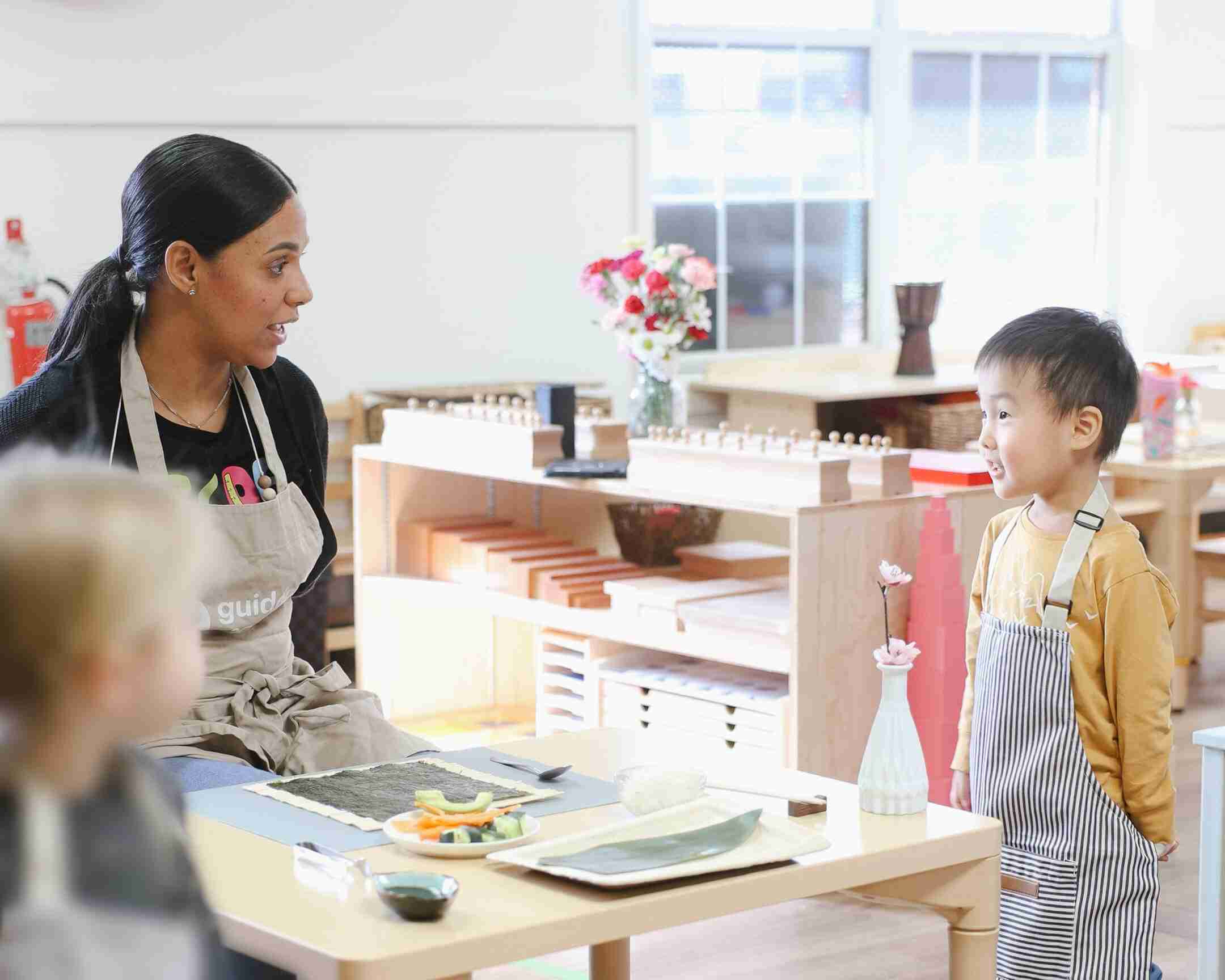
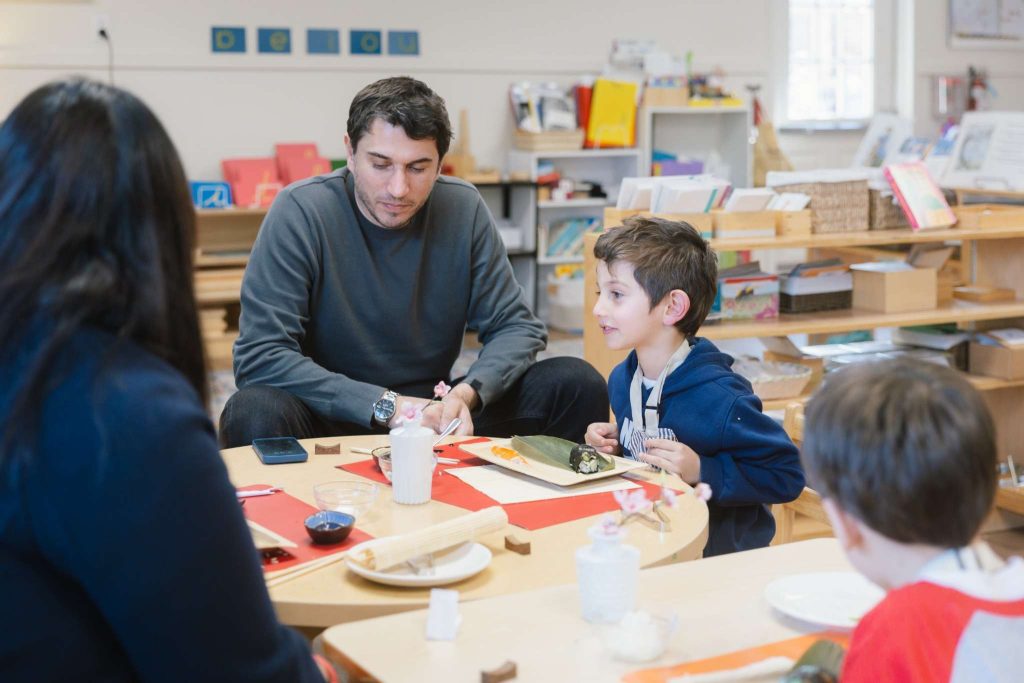
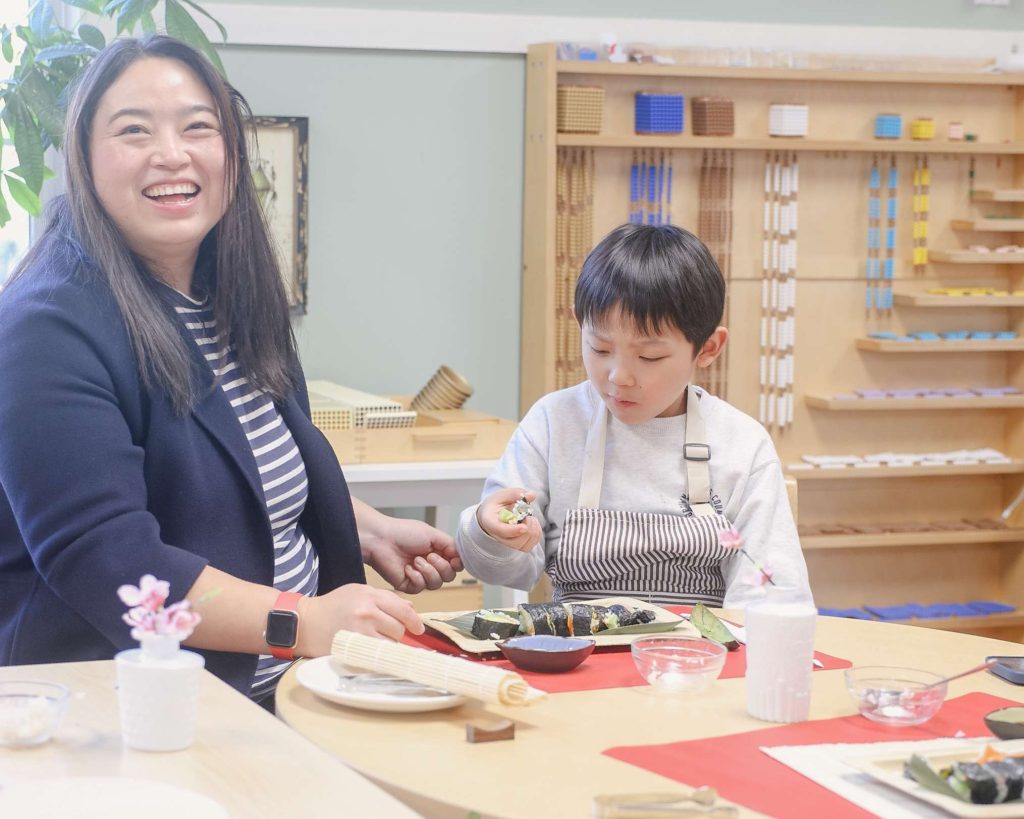
At Mahwah, that philosophy comes to life again and again. One standout example was a special Sushi-Making Event, where parents, children, and guides rolled sushi side by side. What began as a cultural lesson became a joyful expression of connection.
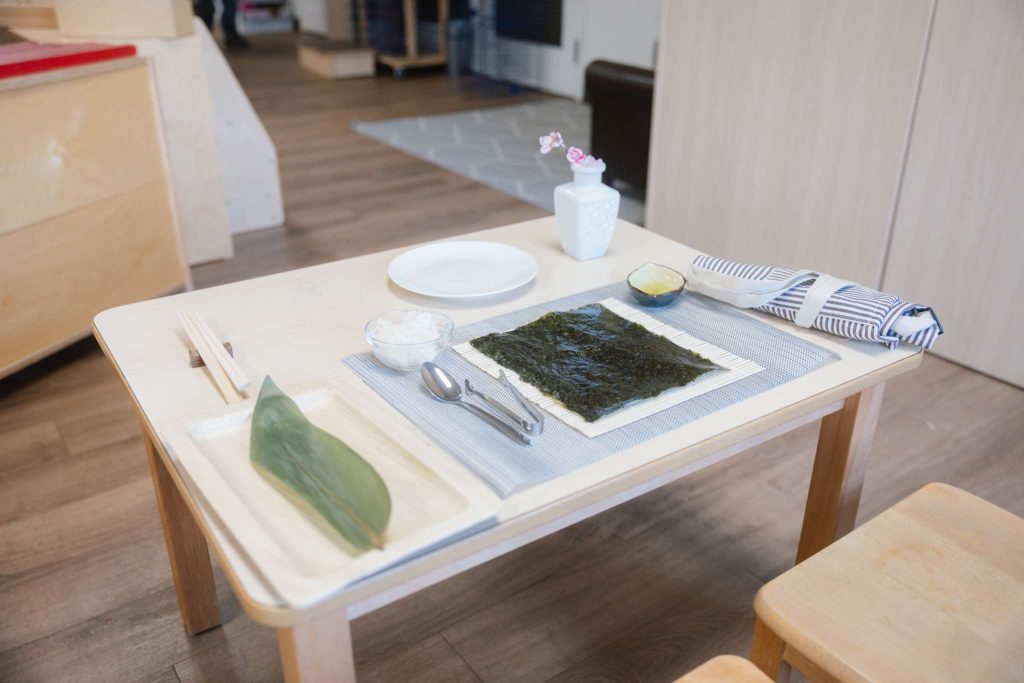
Children spread rice, sliced vegetables, and rolled sushi mats with care, while parents looked on in awe at their children’s confidence and independence. Each station was carefully arranged by guides to reflect Montessori principles of order, beauty, and purpose.
Events like these are more than photo opportunities. They are experiences that strengthen trust between home and school. Parents leave inspired, having seen firsthand how Montessori principles nurture independence and calm in their children.
A Montessori Moment at Mahwah’s Trunk-or-Treat
Just recently, our Guidepost Montessori Mahwah team joined the town’s Halloween Trunk-or-Treat event, bringing a touch of Montessori magic to the community.
Instead of candy, they handed out Clementines—each with a QR code that invited parents to watch one of our guides, Darcy DiModugno, present a Montessori lesson on how to peel a Clementine.
Watch the video below and get a glimpse into how even the simplest daily moments can nurture independence, concentration, and joy between you and your child!


Listening as the Heart of Community
We believe that a true Montessori community is built on listening.
“Our parents value our Montessori community because it’s a two-way street,” Erika says. “It only works if both sides are contributing and listening. We don’t just share information, we listen.”
That mutual trust is what holds a school community together. Even when challenges arise, respect and empathy keep the relationship strong.
“A partnership is also sometimes getting those concerns and problems and not being able to resolve them the way they want and still maintaining that respectful partnership because there is mutual trust,” Erika adds.
This balance of professionalism and warmth makes our schools deeply human. Families sense that they belong to something real.
The Guidepost Difference
Across every Guidepost Montessori campus, from New Jersey to Texas to Hong Kong, the same philosophy shines through: children learn best when parents feel supported and connected.
Our schools offer:
- Open, transparent communication
- Practical parent education and workshops
- Family gatherings that strengthen authentic relationships
- Personalized support for each child and family
This holistic approach is why families describe Guidepost as a community that feels like home.
Why It Matters for Children
Ultimately, partnership between home and school is about what children experience every day. When parents and guides communicate and trust each other, children feel that alignment.
They sense consistency between environments, the calm assurance of adults working together, and the stability that gives them confidence to explore and grow.
“When school and home work hand in hand, children thrive,” Erika says. “And that, at the end of the day, is the goal of our partnership.”
In our Montessori classrooms, that thriving looks like independence, curiosity, and joy. Behind every confident child is a network of trust connecting parent and guide.
Why Parents Stay
Families may come to Guidepost Montessori for the academics or the calm, purposeful classrooms, but they stay because of the relationships.
They stay because they feel seen.
They stay because they trust their child’s guides.
They stay because they’ve found a partnership that makes them stronger parents and helps their children flourish.
They find joy in being part of a vibrant Montessori community where every moment matters.
“When school and home work hand in hand, children thrive,” Erika reminds us. “And that, at the end of the day, is the goal of our partnership.”
Because within these walls, parenting becomes a shared journey, and every step forward is celebrated together.