Building Scissor Skills: What Happens the Day a Child Snips Their Hair
Every Montessori guide has a version of this story.
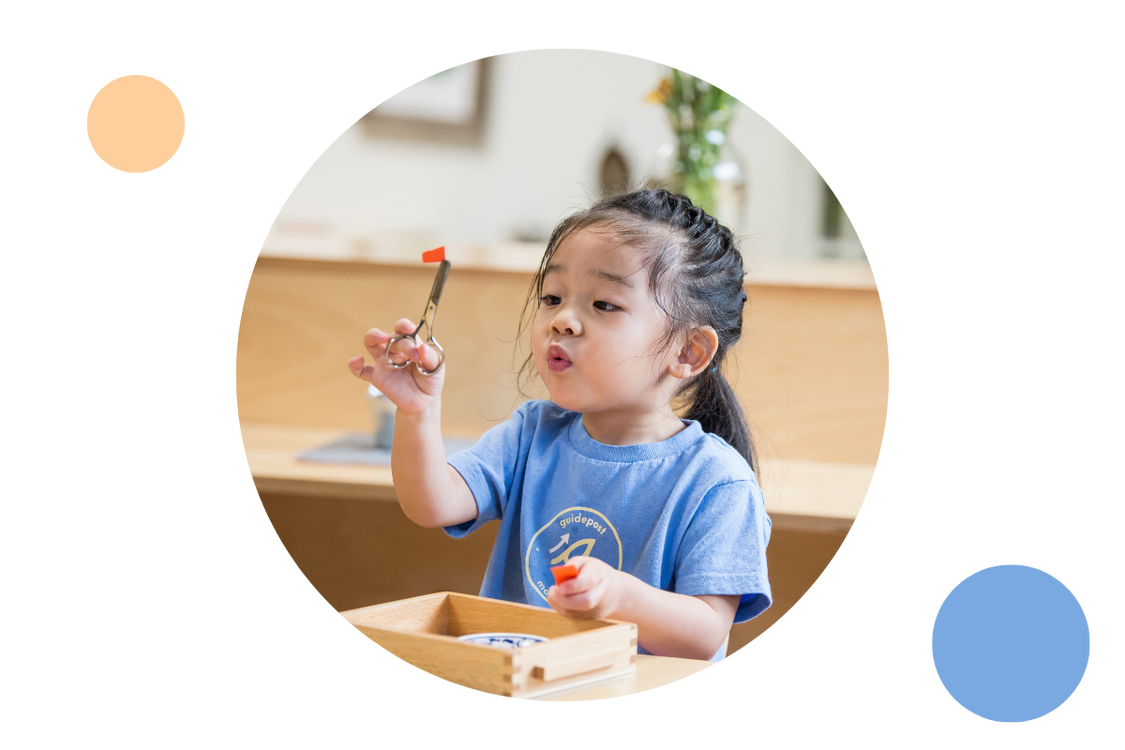
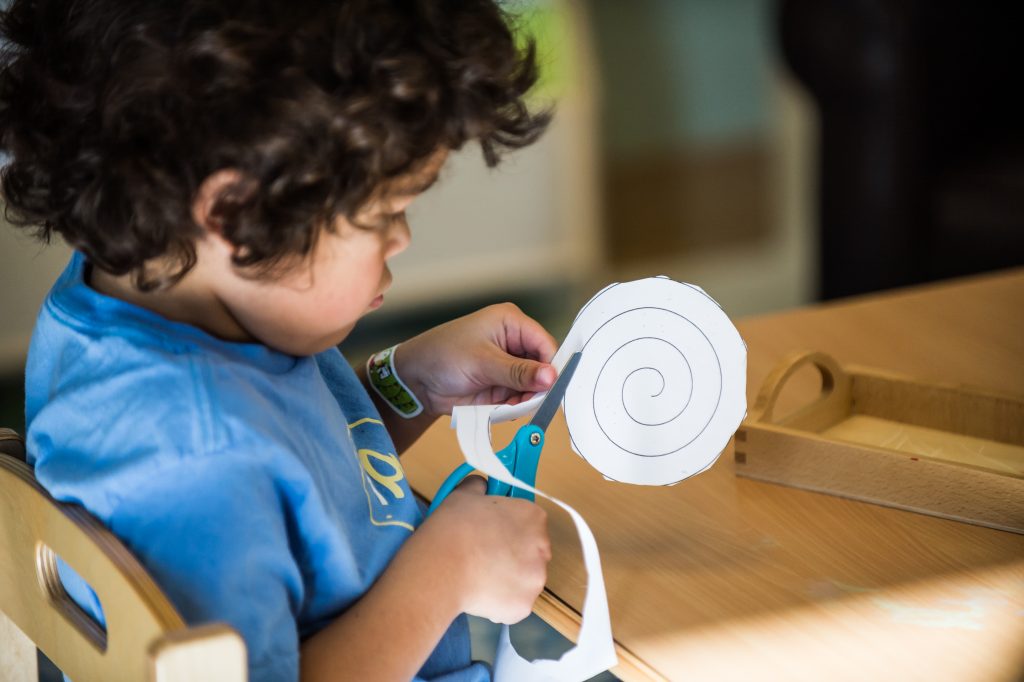
A focused child sits at a small table, cutting paper strips with tiny scissors. The room hums with quiet concentration. Then a small pause—and a soft surprise. A single lock of hair lands gently on the mat.
It happens.
Sometimes it even makes us smile, especially when a parent replies, “He’s been needing a haircut. Thank you!” But behind the humor is something important. Each of these moments is a chance to teach care, safety, and responsibility—the foundation of all early scissor skills development.
This real story from one of our classrooms inspired us to share why we teach scissor skills in Montessori, how we keep it safe, and what parents can do at home to support this important milestone in fine motor growth.

Why Scissor Work Matters in Montessori
In Montessori classrooms, scissors are more than an art supply. They are an essential tool for building independence, focus, and coordination.
When a child practices cutting, they are developing far more than craft skills. They are building the strength and control that support writing, self-care, and confidence in daily life.
Here’s what scissor work supports:
- Hand strength and coordination that later help with writing, dressing, and other fine motor tasks.
- Concentration through a clear beginning, middle, and end—cutting requires sustained attention.
- Independence with a real tool that calls for awareness, safety, and care.
- Practical life confidence by mastering a skill used in everyday life.
Each careful snip builds physical strength and emotional confidence. Scissor skills empower children to say, “I can do this myself.”

How We Set Children Up for Safe Scissor Success at School
Prepared Environment
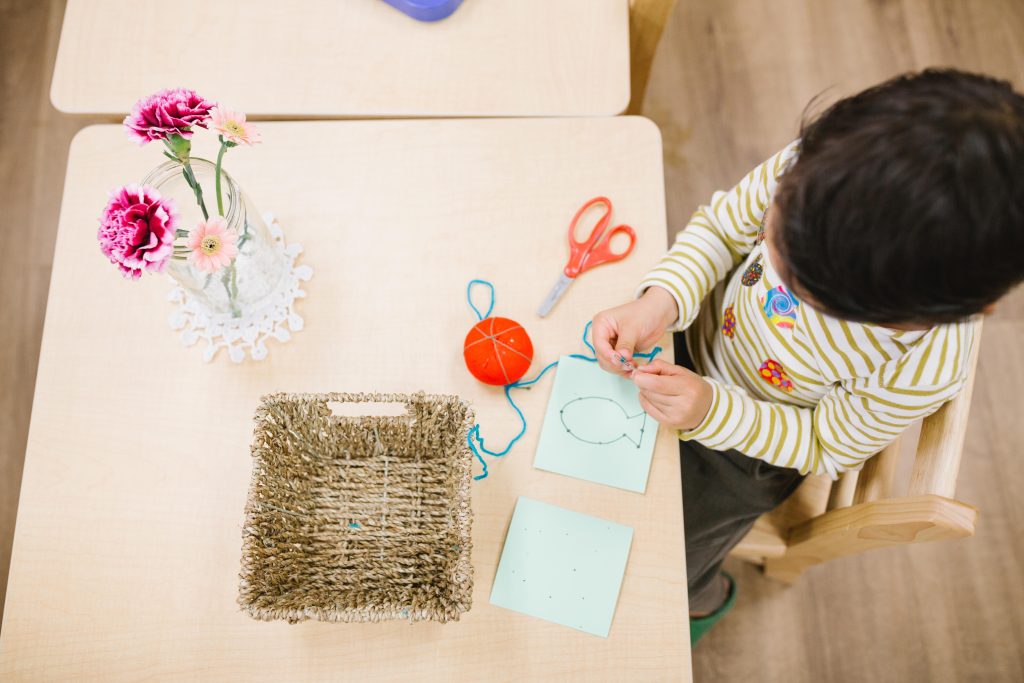
Montessori classrooms are intentionally designed to make scissor work safe and meaningful:
- Child-sized, blunt-tip scissors that cut paper easily but reduce risk.
- Paper strips with clear cutting lines, matched to each child’s level.
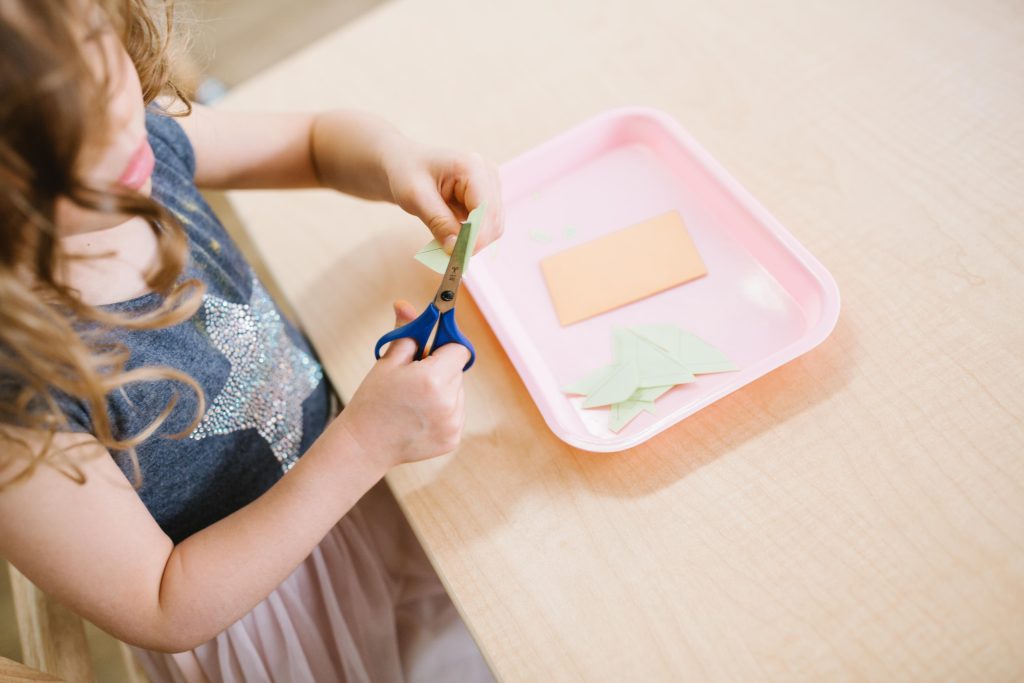
- Defined workspace and trays that contain materials and limit distractions.
Intentional Modeling
Before children begin cutting, guides demonstrate how to use scissors safely and respectfully:
- How to carry scissors with blades closed and pointed down.
- The clear rule: “Scissors are for paper.”
- How to make one slow cut and return the scissors to the tray.
Close Supervision
For beginners, guides stay within arm’s reach, maintaining visibility of hands, faces, and hair. This allows gentle correction before accidents happen.
Kind Redirection
If hair or clothing gets too close, we pause kindly:
- “Let’s tie your hair back so you can see better.”
- If control needs strengthening, we switch to tearing or pinching activities before returning to scissors.
This approach protects safety while preserving the child’s confidence.

The Five Step Process: When a Hair Snip Happens
Even with preparation, surprises happen. When a child snips hair, our goal is not punishment—it’s learning.
Here’s how we respond step by step:
- Pause and stay calm. “I’m going to help you keep your body safe.”
- Secure the scissors. Gently place them on the tray.
- Check and tidy. Smooth the area, gather paper, and stay composed.
- Coach the why. “Scissors are for paper. Hair stays on your head.”
- Reset with success. Offer a short, safe paper-cutting task to rebuild confidence.
Calm, consistent responses teach scissor safety and build self-regulation—two lifelong skills. Learn more about our approach to all practical life skills.

What You Can Do at Home to Build Scissor Skills
Parents often ask how to safely introduce scissor activities at home. The key is preparation, simplicity, and consistency.
1. Create a Small Cutting Station
A designated spot makes cutting predictable and safe:
- Child-friendly scissors (blunt-tip, spring-loaded, or easy-open).
- Narrow paper strips, recycled magazines, or construction paper.
- A small tray and recycling bin for cleanup.
Keep the setup consistent and at your child’s height.
2. Use Simple, Consistent Language
Short, repeated phrases build safety habits:
- “Scissors are for paper.”
- “Blades down when you walk.”
- “Hair behind your ears or in a clip.”
These statements reinforce scissor safety rules without creating fear.
3. Practice Together
Sit nearby at first. Watch with curiosity instead of correction.
Acknowledge focus and effort:
- “You kept your fingers safe.”
- “You followed the line so carefully.”
This shows that process matters more than perfection.
4. Keep Humor Handy
If a small snip happens, take a breath and stay calm. A light tone turns a mistake into a lesson.
If your child repeatedly cuts hair or clothing, share this with their guide. We’ll collaborate on next steps.

Respectful Words We Use with Children
Language shapes how children see themselves. We guide rather than criticize, using phrases like:
- “I see you working carefully. Keep your fingers behind the line.”
- “Let’s tuck your hair back so you can see better.”
- “Scissors rest here when your hand rests.”
This approach turns rules into confidence-building routines.
A Reminder for Parents
Learning to use real tools is a milestone in childhood. Children feel immense pride when they can cut, glue, fold, and create independently.
With a prepared environment, clear rules, and a strong partnership between home and school, even a small haircut mistake becomes a meaningful reminder of something much bigger: your child’s growing confidence, curiosity, and care for themselves and their environment.